Walls Redux

Revisiting and updating…seemed timely

The wall is a physical barrier that must be dealt with in our sport, but it is also a mental/emotional one.

It is in our nature to slow at a wall, to look up at it, to ponder how to get past it. Our tendency is to assume our path continues on past the wall, following the track we have been on, and that the wall stands in our way. In swim training, we must overcome this mindset:  our path does not continue on, but resumes in another direction. The wall becomes a chance to speed up, to readjust, to jump off and speed away on our new path. The wall is not obstacle, but opportunity.

My other experience with walls is The Wall exercise in team building. After working through a series of smaller challenges with a group where you have (hopefully) ironed out differences, insecurities, communication issues, and trust, you are faced with a final challenge. A huge and intimidating wall that the whole team has to get over. There are no handholds or ways to boost yourself, and it is too tall for even your tallest group member to jump to catch the edge. You MUST work together, using the gifts and talents of the group, to find a way over. It is one of the most initially disheartening things to face, and it is easy to fall into “this is impossible”.

I don’t know how others have experienced this, but our group struggled a bit at first. Several people (myself included) balked because of physical limitations like weight or bad back. Some people balked out of fear, or body image issues, or lack of confidence in their physical abilities. I say we struggled “a bit”, but the truth is that we hemmed and hawed and bickered for probably 15 minutes before we made any attempts to get over. FINALLY, a woman who had been a gymnast as a kid and was all of 5 feet tall, told a couple of the guys to give her a boost. Even pushing her as high as they could, she could only get hands to the top of the wall…but then, using her knowledge of gymnastics and flexibility, she tossed one leg straight up and hooked her foot on the top of the wall and pulled herself over. (To this day, it is one of the most impressive things I’ve ever seen someone do.)

Once that happened, we were re-energized. Seeing it was believing it, and working together we got everyone over that wall…boosting from the bottom, reaching from the top to catch hands and help pull, shouting encouragement. When the last person came over, we were EUPHORIC. We all felt the lesson in our bones: we had accomplished something that seemed impossible because we worked together. None of us, no matter how talented or accomplished or naturally gifted, could have gotten over that wall alone; success was only possible as a team.

So how does all this philosophical rambling about walls matter in broader context? In preparation for writing this, I looked up the definition for the word wall, and was interested to find this:  an extreme or desperate position or a state of defeat, failure, or ruin. Those of us who supported a different vision of America’s future than the one we’re facing are feeling this deeply right now. We hung our hopes on joy and progress only to run face first into the wall of other people’s fear, prejudice, and apathy. What now, what next? This wall looms over us, and I now stand in front of it, feeling a bit desperate. I cannot see past it to where we go from here.

We can take lessons from both swimming and team building. We can speed toward this wall, and see it for the opportunity it is. We can have the confidence to race at this wall, lower our heads, hold our breath, flip and jump as hard as we can in our new direction. We can remember that we are not alone in this endeavor, and that our way to deal with the wall is in community. Our “team” can succeed where we as individuals will struggle. Our path is on a different course, one that we cannot yet see, but it will be there, and this wall that seems so daunting is our best chance at finding it. The alternative is letting the wall stop us, leaving us stuck in a place we don’t want to be and weren’t trying to get to. Screw that—let’s push off this wall together and see where our new direction takes us.

Fighting my Imposter Syndrome

The first time my head coach had me run practice for his elite senior group was nerve wracking. The kids didn’t know me well at all, and my mouth went completely dry facing this group of about 25 teenagers, with looks on their faces ranging from uncertainty to skepticism to hostility. Who was I to tell them what to do? Why would anyone want to hear what I had to say? My imposter syndrome raging, I resisted the urge to recite my resume at them and plowed forward.

I’m telling this story mainly because I’m back there again, only this time with venturing into writing and trying to figure out publishing in a social media environment. At the age of nearly 60, learning how to reach people and establish a following is more challenging than that first practice with a new group. NO ONE WANTS TO HEAR WHAT YOU HAVE TO SAY keeps pounding in my head, trying to get me to quit as I have before with my writing.

The thing is: I’m a big believer in paying attention to what the universe puts in your path, and over the last couple weeks I have encountered several blogs, podcasts, and posts where people are talking about everyone needing to use the gifts they have to get us through the next few years. It felt like something was calling me to step up and try again. So here I am, in the face of all my insecurity and imposter syndrome, putting myself out there just in case there is a nugget of something I’ve learned that would help another person navigate their challenges.

Insecurity is debilitating. It drags you back before you even start, constantly whispering to you that it doesn’t matter, no one cares, who would pay attention to you, it’s better to not even try than to try and fail. I saw it so much in the athletes I worked with—why work hard and put myself on the line when I might not win or reach my goal? There is vulnerability in caring and reaching wholeheartedly for what you want, and coming up short can feel awful and devastating. Our insecurity makes us back away from the consequences of trying and failing, but blinds us to the consequences of not trying at all. It makes us defensive and cynical, telling ourselves that our choice or non-choice simply doesn’t matter, that caring is for chumps.

But what is the alternative?

At a macro level, I think we saw the alternative in our last election. Millions of people told themselves “my vote/voice doesn’t matter, why even try, nobody cares anyway, no one wants to hear what I have to say, I’ll just bury my head and protect myself.” The consequences of this choice remain to be seen, but certainly seem to be rolling toward very negative for most Americans.

I don’t know how this journey will go for me, but I do know that I need to try. If what I write helps one person, then throwing myself out here and being vulnerable was worth it. What do I have to lose really? If I never get beyond a follower or two, that will feel embarrassing, but if I give up after two weeks because my insecurity is dragging me back, I will feel worse about myself as a person.

I don’t want to be click-baity…not my style. I want to be authentic and sincere, but maybe that’s not a thing that gets followers. Gotta try anyway, right? Maybe I should put a cat picture on my post to at least get someone to open it.

?????????????

Empty Lanes

Empty lanes of a swimming pool

You can’t win if you don’t show up.

When I started coaching my high school team, the existing habit was to allow the swimmers to pick their events. Being teenagers, they only picked what they liked or felt 100% comfortable with or knew they could win, with the end result being that we left lanes empty in some of the more challenging events. Why choose to swim the 100 butterfly when you could choose the 50 freestyle? Why pick an event you knew you were going to lose? It took doing some math on a whiteboard to show them that those empty lanes were why they kept losing.

In our high school swim league, the competition pools had 8 lanes, so each team could put up to 4 swimmers in each event. Points were awarded down through 7th place, so it was mathematically possible to nullify the other team’s first place by capturing enough of those other points. By not filling every lane, we were ceding points. By not filling every event, we weren’t getting swimmers into the big championship meets.

Once they bought into the math, the next step was their confidence. Building their technique, setting smaller challenges, setting expectations that everyone would try those “harder” events at least once—those were the things that slowly developed their belief that they could succeed. And practice, practice, practice. They became proud of those 6th and 7th place finishes, knowing their small contribution of points moved the team ahead. By swimming a variety of events, they learned they improved their chances of qualifying for regional championships.

I think there is a lesson for Democrats and Independents in this.

Living in a reddish-purple state for many years, I saw SO MANY state and local races where Republicans were running unopposed. Like my teenaged swimmers, the opposition had decided to focus on areas where they were comfortable running and knew they could probably win. They left empty lanes in election after election, and again, I think those empty lanes are why they keep losing. The win (first place) of a Democrat in an urban area gets nullified quickly by the votes (points) of the team that didn’t leave those lanes empty in multiple rural areas. Is it challenging to run in those areas where it’s going to be an uphill battle? Absolutely! Is it worth it in the bigger scheme of things? Absolutely! Because when you leave those lanes empty, you are not only ceding the win to the other team, you are demoralizing your own team. You are creating a situation where even the people who agree with you end up feeling abandoned.

It’s going to take time—finding people willing to take on the challenge, helping them build their skills in communicating their vision, setting expectations that it may take a few cycles to see real progress, understanding that coming in 2nd doesn’t mean you didn’t succeed in making some points with people. It will take practice, practice, practice. It takes the will to try, knowing you might not win.

My swimmers learned that I truly did celebrate those single points of 7th place. They learned that their effort MATTERED. They learned to have pride and confidence in their contribution, and to feel connected to their team. Ultimately, they learned that the only real failure is not trying at all.

Where to Start?

I haven’t written in a while, and with everything going on, am struggling with where to start. To steal shamelessly from Julie Andrews:

“Let’s start at the very beginning
A very good place to start
When you read, you begin with A-B-C…”

When I started this blog, it was intended to bring forward some life lessons I’d learned from coaching and apply them to life more broadly, and perhaps if I was lucky, be a bit inspirational now and then. I need to depart from that format for a while in an effort to try to make sense of what is going on in our world, and perhaps through talking it out, find a way to move forward in a way that feels positive and productive.

I read recently that Kansas has passed a law banning transgender girls from participating in girls’ sports…a law that apparently affects ONE person in the state. One. In a state of nearly three million people, THIS was the issue that rose to the top of the priority list for the time and attention of the elected officials of the state. THIS was the most important need to be addressed. Not the educational system (ranked 27th in the nation, with over 497,000 students in public school), or improving state-maintained roads and infrastructure (over 10,000 miles worth), but something that affects a vanishingly small percentage of the population. Really?

When I look at this, and at how legislators across the nation are spending their time and political power, I can’t help but wonder “why?” Why is so much effort being expended to stop people from expressing themselves freely, exploring new and different ideas, or taking care of themselves and their families in the ways they see fit? Why is this level of control being exerted?

When I was coaching, the teenagers always wanted to wear “technical suits” for their championship meets. These are suits that provide some degree of compression and water resistance, and the kids believed passionately that they wouldn’t be fast without them. No matter how much I assured them that it was the work they had done to prepare their bodies to race, and not the suit, they believed otherwise. Why? The suit was something tangible they could put their hands on, and it gave them a sense of confidence and control they didn’t have in themselves. The suit pacified their fear.

Coaching gives you the opportunity to observe people in a lot of different emotional states, and fear was one I saw regularly. I think humanity as a whole is particularly gripped by fear these days: fear of changes in our climate, fear of dwindling resources in an ever-expanding human population, fear of disease, fear of each other. These fears are real and valid and overwhelming, and hit at our deepest fear, which is our inability to fix any of them. When everything feels out of control, you seek to control anything you can.

I think leaders in churches and governments very sharply feel this fear of not being able to fix these things; they know they don’t have answers or solutions, and they share the fears we all have. Unfortunately, some are responding by inventing issues and targets that we can aim our fears at, that they can then “solve”. Like the technical suit, it provides a sense of confidence and control, as long as they can get us to believe that fixing these invented issues will pacify our fear.

Their solutions are lies because their problems are lies. Like the Wizard of Oz, they’re trying to distract us from the truth, and the real problems only get worse while they waste time driving us apart over who people love, how they dress, whether they choose to have a child, and what words are in books. They could 100% get their way in all of these things, and we would still be facing climate change, dwindling resources, possible pandemics, and even more fear of each other.

I find myself getting angry with the people who believe these lies and latch onto these invented issues as though they are the real problem and what is “destroying” America. When I feel that anger and frustration (and my own fear), I have to remind myself that they’re scared and overwhelmed too…they’re just more comfortable believing the comfortable lie with the easy answer than I am.

I believe we need to work harder to connect with each other directly and not fall into believing lies and easy answers. We need to not listen when a newscaster or preacher or legislator tells us how someone else feels, or what someone else is trying to do to us. It is not gay marriage or men in dresses or books about racism that are making our daily lives feel hard or the future feel hopeless. I have been trying to train myself, every time something elicits an emotional response, to ask “Why do I feel this way? What does the person telling me this gain from me being upset?” For me, it’s been a step in the right direction, and I’ve realized that most of the time the people telling me the bad things want my money or my clicks or my attention.

My other small step has been to try to listen and calmly respond when someone speaks out of their fear or ignorance or judgmentalism. I tell a story from my life that has shaped why I feel differently about what they said. If they don’t listen, or persist, or get hostile, I tell them we have to change the subject or I’ll need to walk away. It’s worked surprisingly well with some people, but full disclosure: it’s a work in progress for me to not just avoid the conversation to begin with. Introvert here.

I’m considering volunteering as a way to reconnect with community and do something tangible toward fixing the real problems we face. I’m not sure yet what that looks like, and am having a hard time figuring out what to do. More to come.

Whatever you can do to manage your own fear, find some peace, take a positive step, or rebuild community helps in this world. At a minimum, it helps your own stress go down. If you have good ideas, please share in the comments! Hopefully, I will be writing more soon.

Ripples


It’s an old metaphor, to throw a stone in a pond and watch the ripples spread and multiply, to remind us that the things we do have effects that we don’t realize or even intend. Sometimes, you are lucky enough to find out where a ripple goes. A conversation recently with a friend reminded me of one of my own; as usual, names have been changed, and quotes are somewhat paraphrased.

Coaching high school swimming was a mixed bag of frustration and reward. Grueling schedules, uncertain weather, convoluted rules, facility issues, kids not showing, flu season, low pay…the frustrations were many. The rewards felt fewer, but man! The rewards were huge when they came.

I was a great believer in a “no cuts” policy. This was a public school sport, and unlike other sports, swimming is a life skill, and a “save-your-life” skill as well. Over the years, we had many kids come to try the team who didn’t know how to swim at all, and just wanted a chance to learn. We took them all.

In my 2nd or 3rd season with the team, a young woman, a senior,  came to us during the first week of practice, and shared that she didn’t know how to swim but wanted to learn. Tiara was tall, thin and muscular, and looked like she had about 2% body fat, which is not really an ideal combination for an adult learning to swim. Fat floats, and learning to float is immeasurably important when learning to swim, so I knew we had our work cut out for us. It was a challenge, but she was determined, and so was I. We used aerobic float belts, kick boards, pull buoys…basically whatever it took to assist her with the float part so that she could learn the swim techniques that would eventually overcome her lack of flotation.

She was without a doubt our most dedicated attendee at practice, and worked hard. By January (our season began in November), we talked about her racing in a meet. She very nervously and somewhat reluctantly agreed, so we taught her to dive, and in a meet toward the end of that month, she raced a 50 freestyle for the very first time. It was one of my proudest moments as a coach, and I didn’t think I could be happier or more gratified with our work together.

I was wrong. You see, I hadn’t seen the ripple yet.

Fast forward a couple years to another meet, another group of kids. During a break in the action, I felt a tap on my shoulder and turned to find a grinning Tiara at my side. We shared a big hug, and the talk naturally moved straight into “What are you doing these days?!”  She caught me up with what she had been up to, and then shared that since she left school, she had been teaching swim lessons to kids like her, teenagers who didn’t know how to swim. My recollection is that it was her appreciation of what we had done for her, what she had learned and overcome with the support of the swim team, that had inspired her to pay-it-forward.

I was floored. I thought that the reward from that stone I’d thrown in the pond was her personal accomplishment, but that was just the beginning. It was a stunning reminder that our actions have ripples, and that we don’t know the lives we end up touching without ever knowing.

This was a humbling moment. Fortunately in this case, the stone I threw created positive ripples, but the ripples of our actions can just as easily be harmful. It is a reminder to be careful and mindful in our interactions with others so that the ripples we make are positive, and that what others pay forward in our names are things we are proud to own. We may never know where the ripple lands, but if we throw our stones with care and love and concern for others, chances are the ripples will carry that as well.

The Space Between Breaths

breathe-deeply-wooden-sign

I have this tshirt from my full time job that just says BREATHE on the front. My swimmers use to say that I wore that as a cruel joke because of how much I enjoyed giving breath control sets. Controlling breathing is crucial for the physical aspects of competitive swimming, but I’ve long maintained, somewhat secretly, that it is a psycho-spiritual discipline as well.

I’ve been a swimmer longer than I can comprehend. I turned 50 last week, so swimming, both the doing of it and the coaching of it, have taken up a majority of my time on this planet. To say I love it would be an understatement. Swimming itself is a spiritual experience for me, and I get very “zen” about the feel of the water, the sensations of movement through it, and the mindfulness of breathing that swimming requires. I have yet to find anything, any exercise or discipline, that is as truly mind-body-spirit as swimming.

Until today. I went to my first yoga class today, after resisting the urge to start for several years. I had let fear and many excuses block my path, but the time had finally come…I turned 50, the stars aligned and the universe kicked me in the butt and said, “NOW!” So I went.

It was tough, physically and mentally. But I fell in love with the breathing…it’s so much like my first love! The core of the practice is managing your breathing and being mindful of it, using it to aid the movement of your body. I kept thinking, “I can do this! I know it! I’ve taught it!”.

There is a moment when you are doing deep rhythmic breathing when you realize that you can inhale more than you thought you could. There is a moment when you realize there is no rush to exhale. There is a moment when you learn how to expel all the air, not just the “stuff on top” like we do all day, but ALL of it, pushing your diaphragm with intention up into your lungs to push out the last bit. This is all super cool, but the best moment, my favorite moment, is the space between breaths.

It takes a little time to get into the rhythm of those really profound breaths and intentional exhales, but once you adapt, you can find the space. What I’ve discovered is that once I expel all the air, there is a moment, sometimes a second or two, sometimes more, where I don’t feel the urge to breathe at all. There is no urgency, no stress, no worry, no physical pressure to begin the next inhale. It is a moment of absolute perfect awareness and tranquility, floating, yet being 100% present at the same time.

I’m not sure why I felt compelled to share this. Perhaps it is because I haven’t written in a long while. Perhaps it is because I’m in the throes of a new “crush” and wanted to babble about it. Perhaps it is because I enjoy how one part of my life connects and prepares me for another, allowing me to honor what has gone before and use it to inform my next steps.

Or maybe I just thought it was cool. Namaste!

Joy and Abandon

swim29Cannonball

Competitive swimming is about details, no doubt about it. Every motion is analyzed, from the position of the head to the angle of the hand on entry to the bend of the knee. We measure heart rate recovery, and the building of workouts consists of balancing elements of the different energy systems. Minutes of training, rest between sets, weight lifted, number of practices, stroke count, reaction time, breathing, and above all, time, time, time….we measure it all. It is easy for both coaches and swimmers to get bogged down and succumb to the tyranny of measuring the details.

You remember when you were little, and you swam wildly and happily, just because it was fun? You didn’t really care how it looked or how long it took, you just DID IT. Somewhere along the line we lose the ability to do this so easily, and it usually starts with a comment like “Hey, you could be really good at this if…”

If. If only you came to more practice. If only you tried harder. If only you fixed this or that. If only you started focusing on the details.

So we do. We like the idea of being good at something, and we like the idea of pleasing people, so we start to focus on the details, work harder, show up more, measure, measure, measure. The more we focus, however, the farther away “good” seems to be…no matter how much we improve, there is always a measurement that says we can be better, faster, stronger, or more dedicated. Before we know it, we can’t remember what it felt like to have fun swimming.

I could see the tension in my swimmers who were at this point, tension in the shoulders, in the face. They were flooded with disappointment in themselves when they failed to reach a measurement that meant “good”, and there was almost a sense of defeat in the realization that there was always another “good” to reach.

My advice to them was simple:  swim with joy and abandon. Separate practice from competition, and remember that practice is where we work, measure, and focus on details. Competition is the place to shut measurement brain down, and just DO, just BE, revel in the moment. Trust the work done at practice, stop thinking, and go. Just DO, just BE. Make the measurement of “good” whether it felt fun again.

Joy and abandon.

Life must also be this balance of doing the work and focusing on the details, and then throwing ourselves out there with joy and abandon, reveling in the moment, whatever it may be. Joy should be our goal, not some measurement that means “good” to someone else, not society’s definition of success. Joy should be the goal.

So absolutely, yes, work hard. Have integrity. Show up. Do the right things. Focus on the details. And then throw yourself wildly, with abandon, into the things that give you joy. Let go of caring how you look or what other people think or how you “measure up”, and throw yourself into your joy.

When swimmers could learn to let go and swim with joy again, they often ended up easily achieving and surpassing the “measurement” they were after, with the added bonus of not caring as much. They enjoyed getting there, having the time they were after, but the joy of reconnecting with the fun part of their sport became the goal. The more joy was the goal, the better they got, and the less they worried about it.

Talk about a win.

Integrity

floatie

They say integrity is defined as doing the right thing even when no one is looking. Performing well, or behaving ourselves, only when there is outside pressure to do so is not a character building trait.

I always knew when my swimmers were not working to full capacity, even when they swore up and down that they were. There is a focus and demeanor that is different, a physical expression of fatigue that is unique, when a swimmer is giving it their all. I could always tell.

I often got argued with when I called someone out on it. The funny thing was, the more strenuously they argued that they were trying as hard as they could, working as hard as they could, the more I knew they weren’t. They knew deep down inside that they weren’t, but it was too hard to acknowledge, so they needed me to believe they were. If I believed it, then they could believe it, and override that little nagging voice that was saying, “Nope, you’ve got more in you.”

Integrity is a hard path. It’s listening to that little voice, and doing the right thing, the true thing, even when there is no one to applaud the effort. It’s resisting the temptation to tell ourselves those “little white lies” about how we’re doing our best, or how our shortcut was justified. Integrity is about owning our imperfections publicly and not trying to make excuses for  them. It’s about doing the thing that is right no matter how difficult or time-consuming it may be.

When we fall short or take the easy route, we often will think to ourselves, “It doesn’t matter. No one will know, no one will get hurt,” but that’s simply not true. WE will know. WE will be hurt. Tiny bit by tiny bit, our self-esteem is devoured by those little shortcuts and dishonesties, by those lies and justifications we give ourselves. When we lie to ourselves over and over, we lose the ability to trust ourselves when the time comes that it does matter and others will notice.

Those swimmers that argued with me may have felt they won the day by pushing their conviction that they had done their best. However, on the block, facing an important race, the truth would be in their gut, and they would know whether they were ready or not.

Are you ready?

WHAAAAATT???

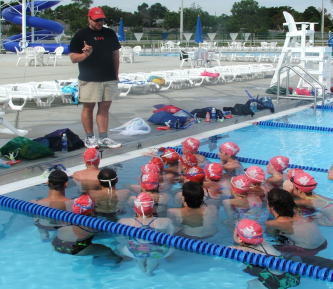
teampic

Coach: “You need to rotate your backstroke more.”
Swimmer: “What?”
Coach: “Rotate!”
Swimmer: “Do WHAT?”
Coach: “Every time you take a stroke, point your belly button at the side of the pool!”
Swimmer: “OH! Okay!”

The key to effective communication is framing it in a way that makes sense to your audience, using language and images they understand. While this might seem very basic, this is a lesson that took me a long time to learn, and despite my enthusiasm as a young coach, I didn’t do a good job of communicating. I delivered information to younger and newer kids the way it was given to me:  using terminology and jargon. I had forgotten what it felt like to not know what “rotate” or “pivot” or “streamline” meant, forgot what it was like to not have a mental picture to go with those terms. I was enamored of being a Coach, and having the status to tell other kids on the team what to do. I was not noticing the confusion on their faces when I gave instruction, and then not understanding why they couldn’t execute the sets.

There was no “lightbulb” moment on this one. My understanding grew with time and maturity, with doing private lessons and tailoring those to the individual, with teaching group lessons to three-year-olds (ACK!), with having older coaches set an example, with working Special Olympics in high school, with becoming a parent, with working with swimmers with autism and developmental delays. My understanding grew as my ability to empathize grew. The more I could put myself in the place of the six-year-old, the better I became at teaching the six-year-old.

As the giver of the information, it was incumbent upon me to meet my audience where they were at, to give the information in a way that made sense to them, and not just in a way that made sense to me or was convenient for me.  I don’t know about you, but I had too few people in my life who modeled this. I had to learn this by trial and error, motivated by the desire to help my swimmers “get it”, even if it meant I had to say it 10 different ways, and demonstrate it twice.

Remember: if the person listening to you doesn’t seem to understand what you are saying, it just might be YOUR lack of clarity, and not that they are deficient in some way. Try again. And again, if you have to.

Float

rough-sea-2

I am writing this one for myself, as a reminder of a powerful image and lesson learned.

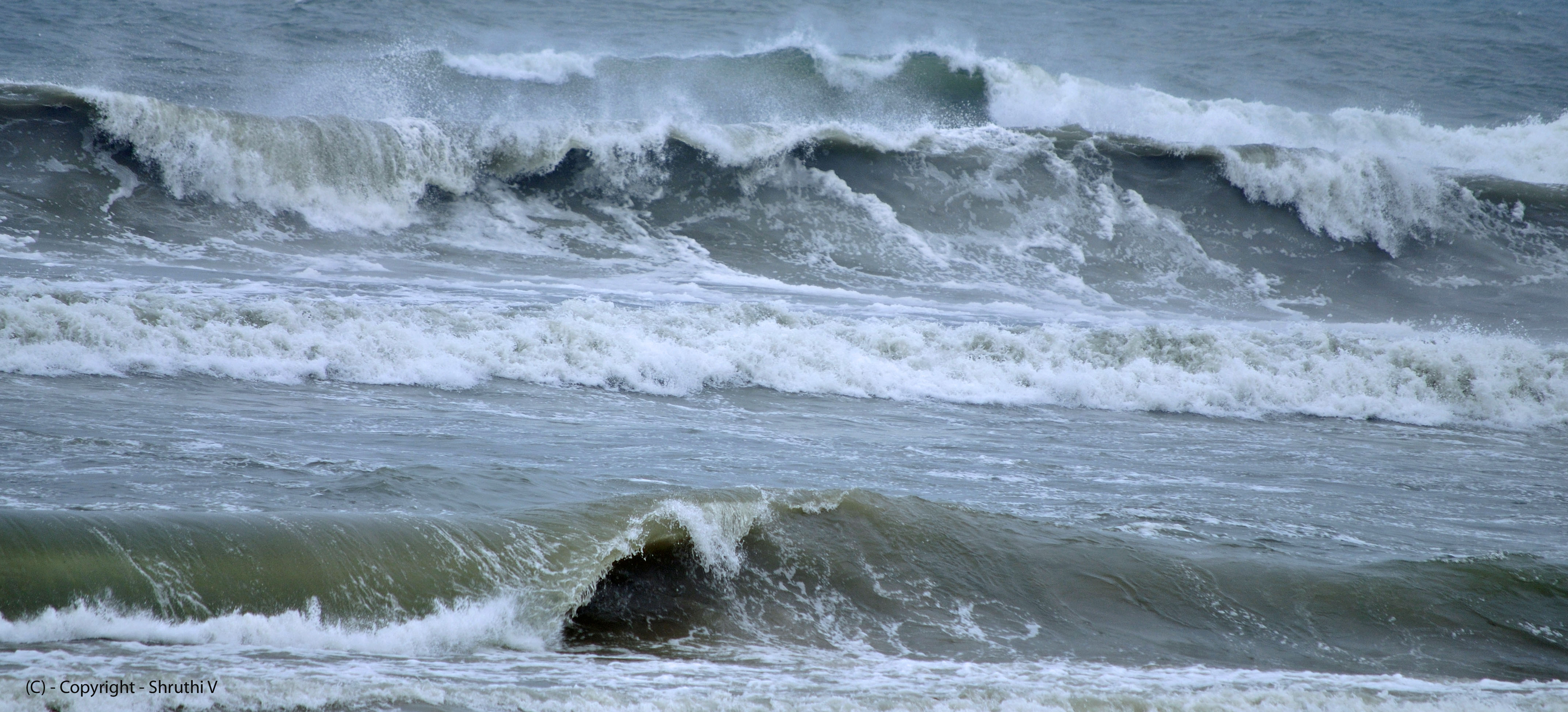
One summer when my family was vacationing at the beach, I had one of my worst scares ever in water. My parents had let my best friend come on vacation with us, and she and I were playing in the surf. It was really rough that day, but we were 17 and both very strong swimmers, so we thought it was no big deal. Plus, we were in about 3 ½ feet of water, so what could happen?

As we played, I got knocked over and rolled by a powerful wave. Coming to the surface, I scrambled to find my feet, only to have them pulled out from under me by the rip current. Wave after wave smacked me down as I tried over and over to plant my feet. I tried to yell to my friend for help, but couldn’t make myself heard before another wave had me. I could feel the bubble of panic form in my gut as I went under yet again.

As I struggled for the surface one more time, the thought, “Stop fighting and FLOAT,” went through my head. Since trying to stand had been an abysmal failure, I trusted that thought and picked up my feet. Instantly, the panic bubble popped and I relaxed. I floated. I let the waves do what they were going to do. The waves that had been so frightening, so cruel, just moments before now bore me to shore and a place where I could find my feet and catch my breath.

We often find ourselves in rough seas in our lives, in places we don’t want to be, being buffeted by circumstances beyond our control. We feel the panic rise as we struggle to find our feet, as our pleas for help go unheard for what they are by those that love us best. The fear that this is the wave that will best us keeps us fighting and resisting.

Times like these are when we most need to just pick up our feet and float. Sometimes we cannot change where we are in life or the circumstances that are beating us down, but we can change our approach. We can choose to accept the rough sea we are in and float, allowing ourselves to be carried a bit. We can float.

That day on the beach, the rough surf took me in to shore and safety, but not where I had expected to be. Pushed farther down shore than I had realized, I had to hike back to where I had begun, but a hike was a small price to pay. It was a good walk, fear replaced by relief and a new confidence in myself.

After all, I had just learned to float.