Empty Lanes

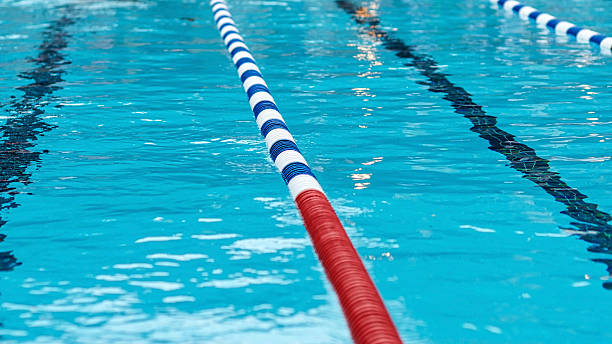
Empty lanes of a swimming pool

You can’t win if you don’t show up.

When I started coaching my high school team, the existing habit was to allow the swimmers to pick their events. Being teenagers, they only picked what they liked or felt 100% comfortable with or knew they could win, with the end result being that we left lanes empty in some of the more challenging events. Why choose to swim the 100 butterfly when you could choose the 50 freestyle? Why pick an event you knew you were going to lose? It took doing some math on a whiteboard to show them that those empty lanes were why they kept losing.

In our high school swim league, the competition pools had 8 lanes, so each team could put up to 4 swimmers in each event. Points were awarded down through 7th place, so it was mathematically possible to nullify the other team’s first place by capturing enough of those other points. By not filling every lane, we were ceding points. By not filling every event, we weren’t getting swimmers into the big championship meets.

Once they bought into the math, the next step was their confidence. Building their technique, setting smaller challenges, setting expectations that everyone would try those “harder” events at least once—those were the things that slowly developed their belief that they could succeed. And practice, practice, practice. They became proud of those 6th and 7th place finishes, knowing their small contribution of points moved the team ahead. By swimming a variety of events, they learned they improved their chances of qualifying for regional championships.

I think there is a lesson for Democrats and Independents in this.

Living in a reddish-purple state for many years, I saw SO MANY state and local races where Republicans were running unopposed. Like my teenaged swimmers, the opposition had decided to focus on areas where they were comfortable running and knew they could probably win. They left empty lanes in election after election, and again, I think those empty lanes are why they keep losing. The win (first place) of a Democrat in an urban area gets nullified quickly by the votes (points) of the team that didn’t leave those lanes empty in multiple rural areas. Is it challenging to run in those areas where it’s going to be an uphill battle? Absolutely! Is it worth it in the bigger scheme of things? Absolutely! Because when you leave those lanes empty, you are not only ceding the win to the other team, you are demoralizing your own team. You are creating a situation where even the people who agree with you end up feeling abandoned.

It’s going to take time—finding people willing to take on the challenge, helping them build their skills in communicating their vision, setting expectations that it may take a few cycles to see real progress, understanding that coming in 2nd doesn’t mean you didn’t succeed in making some points with people. It will take practice, practice, practice. It takes the will to try, knowing you might not win.

My swimmers learned that I truly did celebrate those single points of 7th place. They learned that their effort MATTERED. They learned to have pride and confidence in their contribution, and to feel connected to their team. Ultimately, they learned that the only real failure is not trying at all.

Journalism

I’ve been sifting through some of my older writings lately, and I’m astonished at how little things have changed. I wrote the first part of this in 2011, and the second part in 2018, and could have easily written it yesterday.

Part 1:

I’ve come to the realization that we no longer have a free press in this country. It used to be that members of the media were observers and journalists, more words on paper than celebrities in their own right, reporting in a hopefully unbiased way on the things people were already interested in. Slowly but surely, these journalists became entertainers, enjoyed their own celebrity, and integrity in the media gave way to money. Corporations with political agendas bought up news organizations as corporate geniuses realized there was huge money in controlling the information people were given.

The media no longer observes, it directs and orchestrates where our attention is paid. They (along with our politicians) participate in the circus to divert our attention away from real issues, and onto the latest inflammatory drama. The danger in the loss of our truly free press is that we as a society have lost the ability to exert any kind of “peer pressure” on members who behave wrongly because the sleaze in question is bombarded with attention, cameras, and “journalists” from around the world, making their idiocy into a career.

Part 2:

Little did I realize at the time how ill-informed I was. I recently came across this quote…and was completely shocked by the date at the end:

“There is no such thing at this date of the world’s history in America as an independent press. You know it, and I know it. There is not one of you who dares to write your honest opinion, and if you did, you know beforehand it would never appear in print. I am paid weekly for keeping my honest opinion out of the paper. Others of you are paid similar salaries for similar things, and any of you who would be so foolish as to write honest opinions would be out on the streets looking for another job. If I allow my opinions to appear in one issue of my paper, before 24 hours, my occupation would be gone. The business of the journalist is to destroy the truth, to lie outright, to pervert, to vilify, to fawn at the feet of Mammon and to sell his country and his race for his daily bread. You know it, and I know it, and what folly is this, toasting an independent press? We are the tools and the vassals of rich men behind the scenes. We are the Jumping Jacks. They pull the strings, and we dance. Our talents, our possibilities and our lives are all the property of other men. We are intellectual prostitutes.”

— John Swinton, CEO, New York Times, New York Press Club, April 12, 1953.

All I could think was “What the F***???”  Really? The CEO of the NY Times knew this in 1953?  Why have I been laboring under this false illusion for so long?  When I wrote the item at the top, in 2011, I thought that the phenomenon of corporate control of the media, and the complete selling out, were coincident with TV journalism and the instant celebrity of all who looked at us out of the magic box. That the sleaze was post-Walter Cronkite.

All I can say is that I think we want to be lied to. If we wanted our journalists to be JOURNALISTS, we would insist on it. We love the Great and Powerful Oz, and don’t really want to know what’s going on behind the curtain. And that makes me sadder than I can say.

You Are Not Alone

Individual sports (track, gymnastics, swimming, etc) offer an interesting experience for the participant. You train with a team, your efforts may support your team in term of points earned, but the competition itself can be a lonely affair. You stand alone, waiting for the signal to begin. The weight and pressure of the moment is borne alone, and as the crowd is silenced in preparation for the start, that moment can feel overwhelming. This is when the bonds of team are crucial. This is when you must remember, you are NOT alone.

At a time when things are difficult and frightening, isolating from friends can get overwhelming quickly. It is easy to focus on what is different, what is wrong, what is missing, and go down the rabbit hole, alone with the awfulness in your head. Catch yourself, and turn to your team. You are NOT intruding by reaching out, your friends are in this too. Reach out, check in, send a funny GIF, or even better, call and talk. Hear each others’ voices. Laugh. Write an actual letter and send it via snail mail!

Never forget, you have a team. There are more people than you realize rooting for you, praying for you, and wishing you well. You are NOT alone on that starting block; this is merely a temporary isolation. Look to your (metaphorical) left and right, and see your friends. Look around a little farther and see your wider team, your coaches, your parents, grandparents, and their friends. See your community. We are all invested in YOU, just as you are invested in us.

YOU ARE NOT ALONE. As always, I am here if you need me.

Fondly,

Coach Jill

My Team

When I was still coaching, it was vitally important with every season, every group, to create a sense of common purpose, common discipline and common goals. That is the essence of “team”–working together to overcome challenges and achieve results. Sometimes sharing a common pain (like 5am practices) is enough to bond a team together. This, folks, is our time. Our team.

We are a team. You, me, my children, your children, the person that cuts your hair, the person that packed the Amazon box sitting on your porch, the lady in China that stitched the socks you’re wearing. A team. My team. Your team. Our human team. In times like these, times that pull the rug out from under “normal”, we all feel the fear in our throats, that clenching uncertainty with every closure and new announcement. What will come next?

As adults, that fear is an awful and unwelcome companion. We have forgotten our child selves, who lived regularly with uncertainty and fear. It is the fear of the young swimmer, standing on the blocks, exposed and cold, wondering what the next moments will bring. It is the fear of “Can I do this?”, “Will I measure up?”, and “What am I made of?” We adults avoid making ourselves vulnerable like that, so when it is thrust upon us, we panic, and build ourselves a fort of TP and hand sanitizer and hot dog buns, as though the things we own will allay the fear.

I cannot make your fear go away, but I can tell you this:  you have it in you to deal with this situation, weird and unexpected as it is. You are made of all the things you always were, all the unique and beautiful things that make you YOU, and you have strengths in there that will bring you and your family through this. You do not need to worry about measuring up; coping is not a competition, and how YOU process stress and challenges will not be what your neighbor does, and that’s OK.

I will encourage you throughout to be a person you will be proud of when this is all behind us; let it bring forth the best of who you are deep down. Do your best to uplift the people in your life. Enjoy the small things, hug your family, feel the love.

And if you need some cheering on, reach out to me. After all, you’re on my team!

Fondly,

Coach Jill

Stronger Than WE Think

(Sequel to Stronger than You Think, published Oct 2014)   Recent events have had me reflecting on the items in this blog, and reconsidering writing. I am inspired by the actions of young people in these early months of 2018, and my writing may veer from my theme of lessons learned from swimming at times. My love of young people is a huge part of my love for swimming, so perhaps the “theme” will not deviate too much.
In October of 2014, I published Stronger Than You Think, a story about the gut-level strength and resilience of young people, and one swimmer in particular. I was in awe of her, as I am currently in awe of the young people leading the #MarchforOurLives movement. I’m not sure how many people are aware of what an important and pivotal moment we are in. I hear too many adults either being dismissive (“kids shouldn’t be doing that, saying that, thinking that, leaving school, marching, blah, blah, blah…”), or being completely patronizing (“you kids should be so proud of yourselves…look at you taking action like you’re grown ups!”)

We need to hush for a moment and really pay attention. We need to hear them, really hear them and what they are saying. We need to think long and hard about how difficult it is to stand up and stand apart when you’re in middle school or high school…you know, that age when conformity is EVERYTHING. We need to see, feel and appreciate the gut-level strength it takes to do what these kids are doing, and their persistence in the face of some pretty ugly backlash.

Working with teenagers taught me a lot of valuable lessons, perhaps the best of which was that as an important adult in their lives, I needed to not just react to them, but to think, to listen, to consider, to look underneath the surface, to seek understanding. The other lesson I learned was that teens tolerate ZERO bullshit, and they can smell it a mile away.

Watch the talking heads and you will see adults patronizing, dismissing, condescending, and generally engaging in bullshit trying to deal with the young people in this country. They couldn’t be responding in a worse way. They have no credibility, no trust and no traction. These kids have discovered their strength, both individually and as a group, and they will not give it up. I, for one, am a huge fan.

Swimming is an individual sport in many aspects, but one with a team element. The best individual swimmers have a strong and functional team they train with. Their focus and strength, their ability to persevere in the face of adversity, to fight for their goals…this all comes from the support of the team. #MarchforOurLives is a team worth watching.

Sportsmanship

sportsmanshipAt a summer league meet one year, against a team we were going to beat soundly, my 15-18 boys asked if they could swim “silly strokes” against the competition in the 100 free, and didn’t initially understand when I said NO. I explained that being so sure you’re going to win that you don’t do your best, that you don’t even compete “for real”,  showed immense disrespect for your competitors, and was terrible sportsmanship. I recall asking them how they would feel on the receiving end of that. Luckily, I was able to dissuade them from this behavior. Luckily, they asked me before they did it.


“It’s not whether you win or lose, it’s how you play the game.”  Wise words.

As a coach, I was a stickler for sportsmanship. I didn’t engage in “trash talk”, and discouraged my athletes from doing so. I insisted that they showed respect at all times for themselves, their teammates, their competition, and the volunteers. I made them stay in the pool until everyone had finished the race; I encouraged them to congratulate their competition, win or lose; I would not allow temper tantrums or throwing of goggles over a bad race; I pulled my best swimmers from competition for unsportsmanlike behavior; and I was always on the lookout for anything that smacked of poor sportsmanship, to the point where I’m sure many of them thought I was just not any fun. So be it.

Sportsmanship is a demonstration of character, and was always one of my highest priorities. Honoring the rule and spirit of competition by competing fairly, honoring yourself by doing your best, honoring your competition by being gracious in both victory and defeat, holding yourself to a standard of behavior that exhibits respect…these are all incredibly important life skills, and athletic competition is a natural place to learn them.

I have become distressed in recent years to see the growing lack of emphasis on sportsmanship in athletics, from beginner levels up through professionals. Increasingly, talented athletes are being given a free pass for their bad behavior as parents and fans clamor for the win at all costs. Ugliness creeps into the team culture, accountability on the athlete goes out the window, and the ultimate result in the long run ends up being toxic players and, ironically, fewer wins. Allowing poor sportsmanship is the “path of least resistance” in the short term, but ends up eating the team alive from the inside like a cancer.

It was painfully evident at the Olympics that neither Chad Le Clos nor Hope Solo were ever held to a standard of sportsmanship. Le Clos’ behavior prior to competition, running his mouth, trying to “psych out” Phelps by waving his fanny in his face, simply served to make Le Clos look the fool even before he entered the pool. If he had been able to back up his talk, chances are many of us would have shrugged it off, but that would have been the wrong response. His trash was called out and mocked because he lost, but should have been called out had he won as well. Regardless of the outcome, he exhibited a lack of respect for his sport and for his competition, and that is NOT OK.

Hope Solo played badly during the Olympic competition, and instead of taking responsibility for her share in the team losing, she bad-mouthed the team that won. Having to denigrate the winner to mitigate your loss is the definition of “sore loser”, and is a lesson she should have learned by the time she was 12 years old. Behaving that way at the world champion level and at her age was pathetic and embarrassing; the ensuing  prolonged hand-wringing about how USA Soccer should respond was equally pathetic and embarrassing.

When talented athletes are given a pass to behave this way, whether they are 10 years old or 30 years old, we send the message that sportsmanship does not apply to some; that only those not as good should know how to behave with respect. To that, I say POPPYCOCK! When we, as parents of the prodigy, don’t back up the coach when the child is reprimanded for mocking their teammates or competition, we are creating a monster. When we as a culture excuse a Bobby Knight for throwing chairs because he is a winner, or when we excuse the remarks of a Hope Solo because she is so good at playing soccer, we are creating a monster.

These are not just lessons and behaviors for athletics. Athletic endeavors are where they are most often learned, but respect, manners, graciousness and good behavior are life skills, and we disregard this at our own peril.

You don’t think this spills over into real life? Think again.

Our current election cycle was a prime example of poor sportsmanship in real life. It was filled with people who have either never been exposed to these lessons OR who have been exempted from having to learn the lessons because of their talent or wealth. A major party candidate announced that he would only accept the outcome if he won, and continues to question the integrity of the process, despite winning, because he cannot emotionally accept how many people voted against him. In my own state, a sitting governor refuses to accept the results of the election, repeatedly demanding recounts and alleging fraud…presumably because he can’t believe he could lose in a state that was heavily gerrymandered to make sure those of his party won. It is an understatement to say that I’ve been disappointed with the behavior of the adults who have been tasked with leading our government, at every level. Their behavior would never have been allowed on my team.

America is suffering from a lack of sportsmanship, and the lack of character that follows along. People are appalled by the young athlete who throws a fit over losing, but will defend that behavior when it’s their own child. People bemoan how “kids these days” don’t say please and thank you, but do not demand that their own child do so with volunteer officials. People are furious with the rudeness of others, but dismiss their own rudeness as “speaking their mind”. People gripe about the sore loser who complains and whines about losing, but when their favorite star athlete trash talks, they see nothing wrong.

You can’t have it both ways.

“It’s not whether you win or lose, it’s how you play the game.”

Wise words, indeed.

A Break

resting

As some of you may have noticed, I’ve taken a little break from writing. I was coaching, and the truth is that I have a very hard time waxing philosophical about coaching while I’m actually doing it. I will probably be sharing some things from this most recent experience, but I’m still “processing” how I felt about the whole thing, and trying to figure out what I learned during those months.

I’m going to try to be more regular about posting again, and may stray from swim metaphors on occasion as the mood strikes. I hope 2015 has been treating you well!

Integrity

floatie

They say integrity is defined as doing the right thing even when no one is looking. Performing well, or behaving ourselves, only when there is outside pressure to do so is not a character building trait.

I always knew when my swimmers were not working to full capacity, even when they swore up and down that they were. There is a focus and demeanor that is different, a physical expression of fatigue that is unique, when a swimmer is giving it their all. I could always tell.

I often got argued with when I called someone out on it. The funny thing was, the more strenuously they argued that they were trying as hard as they could, working as hard as they could, the more I knew they weren’t. They knew deep down inside that they weren’t, but it was too hard to acknowledge, so they needed me to believe they were. If I believed it, then they could believe it, and override that little nagging voice that was saying, “Nope, you’ve got more in you.”

Integrity is a hard path. It’s listening to that little voice, and doing the right thing, the true thing, even when there is no one to applaud the effort. It’s resisting the temptation to tell ourselves those “little white lies” about how we’re doing our best, or how our shortcut was justified. Integrity is about owning our imperfections publicly and not trying to make excuses for  them. It’s about doing the thing that is right no matter how difficult or time-consuming it may be.

When we fall short or take the easy route, we often will think to ourselves, “It doesn’t matter. No one will know, no one will get hurt,” but that’s simply not true. WE will know. WE will be hurt. Tiny bit by tiny bit, our self-esteem is devoured by those little shortcuts and dishonesties, by those lies and justifications we give ourselves. When we lie to ourselves over and over, we lose the ability to trust ourselves when the time comes that it does matter and others will notice.

Those swimmers that argued with me may have felt they won the day by pushing their conviction that they had done their best. However, on the block, facing an important race, the truth would be in their gut, and they would know whether they were ready or not.

Are you ready?

The Game Changer

game changer (artwork by Hannah Grace)

This is a true story, and one that changed my life. I lost touch with the people in the story, as we do with so many who cross our paths, and they will never know that their moment laid bare was so momentous for me. I have no idea if they even remember it, if it was profound or meaningful in any way for them, or if it was just another moment like so many others in the life of their family. I have changed their names, to preserve their anonymity, but the rest is their story. And mine.

Jenny was a prodigy. At 6 years old, she knew all four strokes, did them legally, and flew past the other 8 & unders who were still swimming as though they had just had arms and legs installed the day before. Her parents were super-involved with the team, and strutted the deck as though swimming had been invented to showcase their daughter.  Jenny’s older brother, Luke, age 9 and very sweet, still limped awkwardly through his races and was largely ignored. I wish I could say Jenny was a nice child.

Fast forward 7 years. I was a young coach on the team, aged 17. Jenny’s prodigy status had faded, as the height and curves of puberty had taken hold, changing her hydrodynamics significantly. The other girls had figured out their own arms and legs in the intervening years, and grown in strength and ability, and Jenny was no longer easily winning every event. Luke was now one of the best in his age group, while Jenny struggled to keep her place. Mom and Dad, never particularly pleasant people to be around, were NOT happy with the change.

It was a Saturday morning meet, and freestyle was the first event up. This had been Jenny’s biggest struggle lately, and the place where most of the other girls were catching up to her. She had talked to me before she swam, nervous about the race. Jenny was a nice kid by this point, having learned some humility through her struggles, and we were all on her side in wanting her to succeed. She raced well, and out-touched her competition to win the race. I remember how happy she looked, and I remember cheering. She hopped out of the pool and was coming toward me, big smile on her face, when it happened.

Jenny was intercepted by her father, in front of the clerk of course where about 20 kids were sitting and waiting for their races; there were also about another 30 spectators and volunteers in the area, so this was not what you would call a private area. In my mind’s eye, it is a tableau:  Jenny and I facing each other, about 10 yards apart, smiling and excited, with Dad in between us, his back to me. Then he began to yell. He berated her for the race, calling her names, thundering at her for being slow, being lazy, being out of shape, for not beating the girl by enough. I felt frozen to the deck, horrified as I watched her smile fade and her body shrink, tears filling her eyes. He might as well have been hitting her with his fists, the way those words, those hateful words, pummeled her.

I hated him, and I hated myself for not moving, not making it stop, not knowing what to do. The moment finally broke when Jenny, unable to take any more, bolted for the locker room. I followed, and did what I could to console her. To her credit, she rallied and swam the rest of her races, but didn’t enjoy any of them. I have always wondered what happened to Jenny, and whether the events of that day stuck with her, or whether that was just normal life in their family.

That awful moment changed me forever, and became the defining story of my approach to coaching. I promised myself that day that I would NEVER AGAIN allow anyone, parent or not, to treat one of my swimmers that way as long as I was around. This is why I did not allow parents to hang over the pool or fuss at their kids in practice, this is why I have physically intercepted a large, angry dad on his way poolside to yell at his child, this is why I told parents not to “help” me coach, this is why I tried to help parents understand productive ways to give their kids feedback about their races. Parents probably have wondered about my approach, some have certainly called me tough (and worse), and I know it’s bothered some, but the truth is, I wasn’t  there for the parents. I was there for their kids. I was there for Jenny, perhaps trying to make up for the fact that I was too young and shocked to help her that day.

To this day, telling this story gives me goosebumps and makes me cry. I will never forget her face. I will never forget that feeling in the pit of my stomach as I watched her get beaten with words. I will never forget her.

Why I Love My Sport


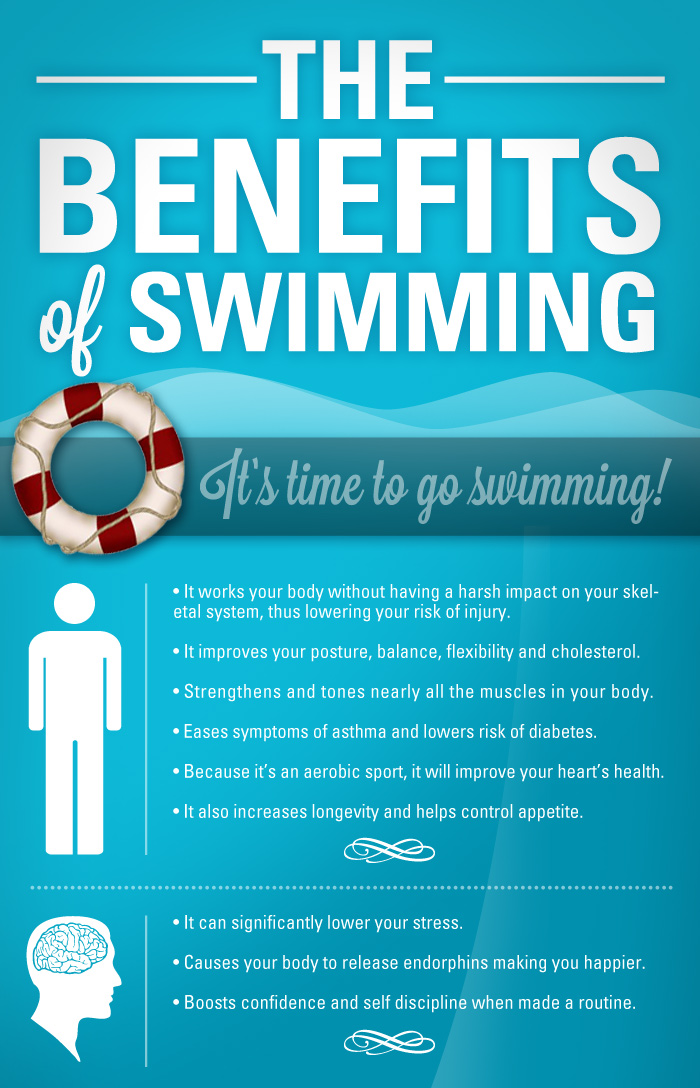
Swimming benefits

I was resting between sets, and saw him come onto the pool deck. He was elderly, moving slowly, and a  bit awkwardly. He sat down at the edge of the pool, removed his prosthetic leg, slid into the water and began to swim. He no longer looked elderly or awkward, no longer showed any sign of the missing leg. I realized then how much I loved my sport.

Why I love the water/swimming:

  • Water is a great equalizer
  • All of us must face the same challenges (breathing, moving, floating)
  • Weightlessness and lack of impact are a godsend for folks rehabbing from injury
  • It’s a forgiving environment for those dealing with the side effects of aging
  • Things considered a “disability” on land often don’t matter in the water
  • Having more body fat actually helps you in the water (fat floats better than muscle)
  • Swimming uses every part of your body, and uses it bilaterally
  • Having even rudimentary skills in the water can save your life
  • It’s some of the best cardio exercise you can get
  • Everyone feels equally vulnerable in the lack of clothing
  • You don’t stink at the end of your workout

I feel like I probably have about a million more reasons and examples, but I won’t go on and on about it. You’re welcome. 🙂