Ripples


It’s an old metaphor, to throw a stone in a pond and watch the ripples spread and multiply, to remind us that the things we do have effects that we don’t realize or even intend. Sometimes, you are lucky enough to find out where a ripple goes. A conversation recently with a friend reminded me of one of my own; as usual, names have been changed, and quotes are somewhat paraphrased.

Coaching high school swimming was a mixed bag of frustration and reward. Grueling schedules, uncertain weather, convoluted rules, facility issues, kids not showing, flu season, low pay…the frustrations were many. The rewards felt fewer, but man! The rewards were huge when they came.

I was a great believer in a “no cuts” policy. This was a public school sport, and unlike other sports, swimming is a life skill, and a “save-your-life” skill as well. Over the years, we had many kids come to try the team who didn’t know how to swim at all, and just wanted a chance to learn. We took them all.

In my 2nd or 3rd season with the team, a young woman, a senior,  came to us during the first week of practice, and shared that she didn’t know how to swim but wanted to learn. Tiara was tall, thin and muscular, and looked like she had about 2% body fat, which is not really an ideal combination for an adult learning to swim. Fat floats, and learning to float is immeasurably important when learning to swim, so I knew we had our work cut out for us. It was a challenge, but she was determined, and so was I. We used aerobic float belts, kick boards, pull buoys…basically whatever it took to assist her with the float part so that she could learn the swim techniques that would eventually overcome her lack of flotation.

She was without a doubt our most dedicated attendee at practice, and worked hard. By January (our season began in November), we talked about her racing in a meet. She very nervously and somewhat reluctantly agreed, so we taught her to dive, and in a meet toward the end of that month, she raced a 50 freestyle for the very first time. It was one of my proudest moments as a coach, and I didn’t think I could be happier or more gratified with our work together.

I was wrong. You see, I hadn’t seen the ripple yet.

Fast forward a couple years to another meet, another group of kids. During a break in the action, I felt a tap on my shoulder and turned to find a grinning Tiara at my side. We shared a big hug, and the talk naturally moved straight into “What are you doing these days?!”  She caught me up with what she had been up to, and then shared that since she left school, she had been teaching swim lessons to kids like her, teenagers who didn’t know how to swim. My recollection is that it was her appreciation of what we had done for her, what she had learned and overcome with the support of the swim team, that had inspired her to pay-it-forward.

I was floored. I thought that the reward from that stone I’d thrown in the pond was her personal accomplishment, but that was just the beginning. It was a stunning reminder that our actions have ripples, and that we don’t know the lives we end up touching without ever knowing.

This was a humbling moment. Fortunately in this case, the stone I threw created positive ripples, but the ripples of our actions can just as easily be harmful. It is a reminder to be careful and mindful in our interactions with others so that the ripples we make are positive, and that what others pay forward in our names are things we are proud to own. We may never know where the ripple lands, but if we throw our stones with care and love and concern for others, chances are the ripples will carry that as well.

The Space Between Breaths

breathe-deeply-wooden-sign

I have this tshirt from my full time job that just says BREATHE on the front. My swimmers use to say that I wore that as a cruel joke because of how much I enjoyed giving breath control sets. Controlling breathing is crucial for the physical aspects of competitive swimming, but I’ve long maintained, somewhat secretly, that it is a psycho-spiritual discipline as well.

I’ve been a swimmer longer than I can comprehend. I turned 50 last week, so swimming, both the doing of it and the coaching of it, have taken up a majority of my time on this planet. To say I love it would be an understatement. Swimming itself is a spiritual experience for me, and I get very “zen” about the feel of the water, the sensations of movement through it, and the mindfulness of breathing that swimming requires. I have yet to find anything, any exercise or discipline, that is as truly mind-body-spirit as swimming.

Until today. I went to my first yoga class today, after resisting the urge to start for several years. I had let fear and many excuses block my path, but the time had finally come…I turned 50, the stars aligned and the universe kicked me in the butt and said, “NOW!” So I went.

It was tough, physically and mentally. But I fell in love with the breathing…it’s so much like my first love! The core of the practice is managing your breathing and being mindful of it, using it to aid the movement of your body. I kept thinking, “I can do this! I know it! I’ve taught it!”.

There is a moment when you are doing deep rhythmic breathing when you realize that you can inhale more than you thought you could. There is a moment when you realize there is no rush to exhale. There is a moment when you learn how to expel all the air, not just the “stuff on top” like we do all day, but ALL of it, pushing your diaphragm with intention up into your lungs to push out the last bit. This is all super cool, but the best moment, my favorite moment, is the space between breaths.

It takes a little time to get into the rhythm of those really profound breaths and intentional exhales, but once you adapt, you can find the space. What I’ve discovered is that once I expel all the air, there is a moment, sometimes a second or two, sometimes more, where I don’t feel the urge to breathe at all. There is no urgency, no stress, no worry, no physical pressure to begin the next inhale. It is a moment of absolute perfect awareness and tranquility, floating, yet being 100% present at the same time.

I’m not sure why I felt compelled to share this. Perhaps it is because I haven’t written in a long while. Perhaps it is because I’m in the throes of a new “crush” and wanted to babble about it. Perhaps it is because I enjoy how one part of my life connects and prepares me for another, allowing me to honor what has gone before and use it to inform my next steps.

Or maybe I just thought it was cool. Namaste!

The Right Fit

goggles2

It’s amazing how much having things fit right affects performance. Swimmers spend a lot of time trying (and rejecting) brands and styles of suits, goggles, caps, fins, etc, in order to find the right fit. Once you find it, you pray the manufacturer doesn’t change anything before you can buy a lifetime supply of what “fits”. I’ve seen kids reduced to tears over the “good” goggles breaking, and I know my own workouts are impacted by a new suit that rubs in the wrong place.

Having equipment that is just the right fit might seem a trivial concern, but not having to think about something leaking or rubbing or falling off while you train or race is crucial. The wrong fit is, at the very least, a distraction and at worst, the cause of minor injuries. No athlete wants to have to waste time thinking about what their uniform and training gear are doing while they train….they just want to train, so a lot of non-training time is devoted to finding the equipment that is just the right fit.

If only we spent that kind of time and care making sure other aspects of our lives fit right! How much happier would we be if we dedicated the time to making sure our colleges, our jobs, our friends, our homes, our communities, our churches, our life partners, were truly the right fit, the BEST fit for us. In those really important and crucial parts of our lives, we allow ourselves to be swayed by the opinions of others or by the reputation of the institution, or by money, or by convenience, rather than choosing what fits us.

I have witnessed a lot of conversations between swimmers regarding goggles, why people use these or those, and I have yet to see anyone change what they use just because a friend uses something else. They might try them out, but it’s usually more in the vein of “Let me use your goggles for a minute and see how they fit”. When it comes to suits and equipment, fit is a choice they make and stick to with confidence.

Yet we are so easily swayed when it comes to our choices in important matters. Sometimes the wrong fit is just a distraction from being our best selves, sometimes the wrong fit can cause us injury of some kind, whether physical, emotional or mental. Forcing ourselves into situations that our gut is telling us is the wrong fit certainly will cause stress if nothing else.

My recent coaching experience was an example of a wrong fit in my own life. For various reasons, I ignored some signs and gut reactions that this was not the right place for me, and as a result, I wasn’t happy, and certainly was NOT my best coaching self. It has left me dissatisfied with the experience, but also a bit annoyed with myself for not honoring that inner voice. Despite all my years of experience with suits and goggles, I tried to force something to fit when it just wasn’t the right thing.

You would think I would have known better.

Connections

HSSwimDay3 KR 13

I swam for 8 years in the Northern Virginia area. I swam for a summer league team with over 100 members, my high school team of over 40 kids, and a year round club team which had between 600 and 800 members, over 50 of which swam at my practice site on a regular basis. I have no friends from that experience. None. Zip. Zero. Nada. Not even one peripheral acquaintance located on Facebook. Given the thousands of hours I spent in this pursuit, that is a sad and pitiful statistic.

Given my own experience, it has been an ongoing wonder for me to watch my swimmers interact and build friendships. I have to confess that there were times I simply didn’t understand when a kid changed teams (or refused to, despite bad coaching) because “that’s where their friends were”.  I have learned from them how much better the intensity of practice and the stress of meets can be when shared with people you care about. I have learned, mostly from my high school team, that the motivation for attending a 5:30am practice can be gleaned from the sharing of the misery. I have learned that while parents and coaches can say a lot, the most powerful words come from your friends. The swimmers I’ve coached have taught me what my own experience lacked.

That emotional connection, that love, is truly the glue that holds it all together, as well as the prize that makes it all worthwhile. Having folks in your corner, cheering for you and rooting for your success, offering a hug and a shoulder when things don’t go well…isn’t that what we all want? Whether it’s a dozen people, or just that one best friend, no one matters quite the way those friends do. They are the lift, the security blanket, the laughter, the tears, the scream of joy, the quiet understanding, the ones who are there solely because they want to be. They are the ones our eyes seek first, the ones who will understand best both our joy and our disappointment, the ones who do not judge or critique or point out where we went wrong. They are the ones who know when we are not feeling well, or having relationship issues, or family problems, or ate too much ice cream. They are the ones willing to go to bat for us and ask for help when we can’t ask for ourselves.

While I know that my attention and presence were important to my swimmers, they taught me how much more crucial that friend, that love connection, was to their growth and success. They have friends that are friends away from the pool, friends they will keep because they laughed and cried and understood and cheered and hugged and sang songs and offered a towel and sometimes just stood there next to them. I’m glad I got to see it, and share in its warmth.

Joy and Abandon

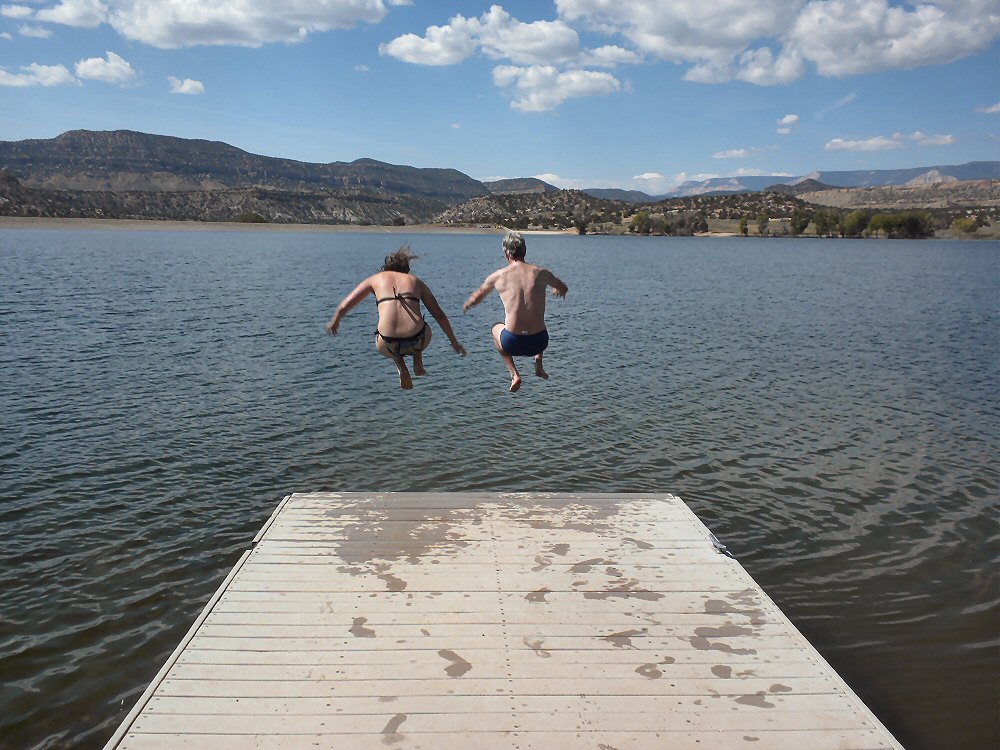
swim29Cannonball

Competitive swimming is about details, no doubt about it. Every motion is analyzed, from the position of the head to the angle of the hand on entry to the bend of the knee. We measure heart rate recovery, and the building of workouts consists of balancing elements of the different energy systems. Minutes of training, rest between sets, weight lifted, number of practices, stroke count, reaction time, breathing, and above all, time, time, time….we measure it all. It is easy for both coaches and swimmers to get bogged down and succumb to the tyranny of measuring the details.

You remember when you were little, and you swam wildly and happily, just because it was fun? You didn’t really care how it looked or how long it took, you just DID IT. Somewhere along the line we lose the ability to do this so easily, and it usually starts with a comment like “Hey, you could be really good at this if…”

If. If only you came to more practice. If only you tried harder. If only you fixed this or that. If only you started focusing on the details.

So we do. We like the idea of being good at something, and we like the idea of pleasing people, so we start to focus on the details, work harder, show up more, measure, measure, measure. The more we focus, however, the farther away “good” seems to be…no matter how much we improve, there is always a measurement that says we can be better, faster, stronger, or more dedicated. Before we know it, we can’t remember what it felt like to have fun swimming.

I could see the tension in my swimmers who were at this point, tension in the shoulders, in the face. They were flooded with disappointment in themselves when they failed to reach a measurement that meant “good”, and there was almost a sense of defeat in the realization that there was always another “good” to reach.

My advice to them was simple:  swim with joy and abandon. Separate practice from competition, and remember that practice is where we work, measure, and focus on details. Competition is the place to shut measurement brain down, and just DO, just BE, revel in the moment. Trust the work done at practice, stop thinking, and go. Just DO, just BE. Make the measurement of “good” whether it felt fun again.

Joy and abandon.

Life must also be this balance of doing the work and focusing on the details, and then throwing ourselves out there with joy and abandon, reveling in the moment, whatever it may be. Joy should be our goal, not some measurement that means “good” to someone else, not society’s definition of success. Joy should be the goal.

So absolutely, yes, work hard. Have integrity. Show up. Do the right things. Focus on the details. And then throw yourself wildly, with abandon, into the things that give you joy. Let go of caring how you look or what other people think or how you “measure up”, and throw yourself into your joy.

When swimmers could learn to let go and swim with joy again, they often ended up easily achieving and surpassing the “measurement” they were after, with the added bonus of not caring as much. They enjoyed getting there, having the time they were after, but the joy of reconnecting with the fun part of their sport became the goal. The more joy was the goal, the better they got, and the less they worried about it.

Talk about a win.

The “C” Word is Can’t

i can't

I routinely ban the use of the phrase “I can’t” on the teams I coach, and instead try to teach positive self-talk, and learning different ways to express the challenges we face.

Can’t. It is one of the most self-defeating words in the language. Not only does it mean falling short of what one is trying to do, it also implies that one will not continue in the attempt. In my coaching career, “can’t” was not the wording used when someone was truly physically incapable of continuing…athletes have a whole different set of expressions when they are in that place. “I can’t” was what was used when what was really meant was “I give up”.

“I can’t” is the pressure release valve, it is the jargon to let ourselves off the hook and make the unpleasantness go away. “I can’t” is not a real state of being, but rather an attitude, and often an attitude about ourselves.

Things I hear when I hear “I can’t”:

  • I quit
  • I don’t want to
  • I don’t know how
  • I’m afraid
  • Don’t make me continue
  • I don’t believe in myself
  • I’m giving up on myself
  • Save me

We have to be careful, both about using the phrase ourselves and about how we respond when others use it. When a toddler learning to tie shoes gives up in frustration and says “I can’t!”, does the parent just do it for him? Or respond with “Let’s try again”? When an athlete backs away from a challenging training set, saying “I can’t”, does the coach take the easy route, shrug it off and turn attention to others? Or respond with a push of encouragement to keep trying?

We need to learn to hear what “I can’t” truly means. We need to hear the fear and insecurity behind that phrase, whether it is coming from ourselves or others. We need to respond with an acknowledgment of the difficulty AND a pep talk to move through it. “I can’t” needs to be transformed into “I’ll try.”

“I’ll try” does not guarantee immediate success in the endeavor, but does indicate a major change in attitude. “I’ll try” is positive, encouraging, and implies an ongoing willingness to accept and face challenges. “I’ll try” combats insecurity with small doses of confidence, and fear with the hope that at the end of the “try”, the challenge will be overcome.

Stronger Than You Think

stronger

I was constantly bowled over by the strength of the kids I coached, and I don’t mean in the physical sense. Children have an internal, gut-level strength that we adults do not give them enough credit for, and as a coach I was often privileged to see this in action. The following is a true story, and as usual, names have been changed.

A dozen or so years ago, I was head coach of a summer league team, and part of what we would do at the first practice after a meet was hand out ribbons. You got a ribbon for down to 6th place, I think, and anything else got a participation ribbon; the only kids who didn’t get the coveted ribbon were the ones who had disqualified in the event. I had finished handing everything out and the kids were all trickling away, when one little girl approached me. She was ten or eleven at the time, and had a VERY concerned look on her face.

“Coach, I think there was a mistake.”

“Oh yeah, Mary? What’s that?”

“Well, I dropped eleven seconds off my breaststroke time, and I know I beat some other girls, but I didn’t get a ribbon.”

My heart sank. I was afraid this one was coming.

“Mary, you got DQ’d.”

“But why?”

“Well, you use that nose plug when you swim, and I know you like it to keep the water out of your nose, but when you dove in and came up,  you reached up and adjusted it which is considered ‘breaking stroke’, so you got disqualified. And that means it’s like the swim never happened, so you don’t get to keep that faster time either.”

Silence, and a concerned frown.

“How do I fix that?”

So I explained the technique for blowing air to keep water out of your nose, and assured her we would work on it in practice. I wasn’t terribly worried about it, things like this happen all the time in summer league swimming, and I knew it would resolve over the summer. To me, this was not a big deal.

Fast forward to our next swim meet, less than a week later. The breaststroke event came up, and I noticed Mary behind the blocks, no nose plug in sight. I nudged my assistant coach, and we watched to see how Mary would do without it. She swam fast, and “legally” (no DQ), and dropped 12 seconds off that previous best time! We were ecstatic and cheering, when her mom approached.

“I want to tell you something,” she said, “even though Mary asked me not to. I think you need to know. Mary had me bring her to the pool every day, twice a day, so she could practice not using the nose plug. She didn’t want to DQ again, and have the swim be like it never happened.”

I was floored. What to me was “no big deal” was a huge deal to Mary. In less than a week, Mary had taken it on herself to let go of something she thought she needed, something that probably made her less fearful in the water, and had succeeded. The kind of strength and determination it takes to not only fix a technique detail, but overcome the emotional attachment to a crutch, is something rare to see.

Mary opened my eyes to the strength that children possess, and in fact, I have seen this kind of fortitude far more in children than in adults. I have been honored time and again with the opportunity to share in that journey with a young person, and witness their release of fear, triumph over challenge, and victory over their own insecurity. They are brave in a way I sometimes think adults have forgotten how to be.

My goal for this year has been to rediscover how to be brave. I left coaching, and now I will return in a different capacity, with a new team. Both of these were acts of bravery, and in doing these things I hope I honor the numerous kids over the years who have taught me so much.

Discomfort

swim injury

As a middle-aged former athlete, I live in the frustrating limbo of still being technically able to perform the sports and activities I want while also being stymied by pain. Things hurt. Every day. Good weeks, it’s the same pain each day; most weeks, it’s something new and multiple things each time I exercise. I’m trying very hard to recall my lessons from swimming to help me get through this.

While coaching teenagers, I spent a lot of time talking about the difference between pain and discomfort. Pain is severe, and means injury, and injury prohibits going forward until healing takes place. Discomfort, on the other hand, is a byproduct of hard work, and moving through discomfort is a mental discipline as much as a physical one. The ability to bear discomfort and move through it means one will ultimately be stronger. In athletics, discomfort is a step in the process of growth and improvement, while injury is a show stopper.

Learning to sort pain from discomfort is a skill, and when one is young and strong, most of what is felt is discomfort. It is the tiredness, fatigue, and achiness of pushing your body to its limits, over and over again, in the hopes of getting stronger. When one is young, the body responds easily to this push, and gets stronger quickly, repairing itself rapidly, ready to face another practice, and another challenge.

There is a different combination of pain and discomfort when one is older. There is still the achiness and fatigue, which takes longer to subside and longer to recover from. There is the pain of aging joints and muscles, twinging and zinging as we move, disrupting our workout flow. There is also the discomfort of the self-doubt which creeps in with every tight muscle, every sore knee, every white hot nerve. Things that never used to be a problem zing and hurt with every streamline, every push, every kick…and suddenly the battle I’m fighting isn’t physical anymore. My “demon” isn’t the 5000 yard workout my coach just set in front of me….it is the fear and insecurity that has crept in with each workout I’ve missed due to pain. It is the unsettling realization that my body is different, that I don’t know it and can’t count on it the way I used to. It is the trust I’ve lost and the panic I’ve gained over muscles and joints that no longer respond the way I want them to, the way they did for so many years.

If I were my own coach, standing outside myself, what advice would I give?

I would say this:  What you’re feeling is a normal and natural part of where you are in life right now, and the first part of defeating the mental discomfort is to accept that the fear and insecurity and frustration are a normal step in the process. Before you can move forward, you have to realistically accept where you are starting from. This “new normal” is now just normal…it is what it is, for now. Then you have to set goals: where do you want to be in a year? What are the milestones along the way, at 3 months, 6 months, 9 months? What do you need to do each week to make each milestone? And what are the self-care techniques, both physical and mental, that will help you stay on course each week?

It sounds so simple when I say it as though I’m talking to someone else. Although I’ve been talking primarily about the pain and discomfort that accompany physical challenges, I think this applies across the board. Accept where you are. Think about where you want to be. Set goals, and stair steps to getting there. Take care of yourself along the way.

Swimming really DOES have all my answers.

WHAAAAATT???

teampic

Coach: “You need to rotate your backstroke more.”
Swimmer: “What?”
Coach: “Rotate!”
Swimmer: “Do WHAT?”
Coach: “Every time you take a stroke, point your belly button at the side of the pool!”
Swimmer: “OH! Okay!”

The key to effective communication is framing it in a way that makes sense to your audience, using language and images they understand. While this might seem very basic, this is a lesson that took me a long time to learn, and despite my enthusiasm as a young coach, I didn’t do a good job of communicating. I delivered information to younger and newer kids the way it was given to me:  using terminology and jargon. I had forgotten what it felt like to not know what “rotate” or “pivot” or “streamline” meant, forgot what it was like to not have a mental picture to go with those terms. I was enamored of being a Coach, and having the status to tell other kids on the team what to do. I was not noticing the confusion on their faces when I gave instruction, and then not understanding why they couldn’t execute the sets.

There was no “lightbulb” moment on this one. My understanding grew with time and maturity, with doing private lessons and tailoring those to the individual, with teaching group lessons to three-year-olds (ACK!), with having older coaches set an example, with working Special Olympics in high school, with becoming a parent, with working with swimmers with autism and developmental delays. My understanding grew as my ability to empathize grew. The more I could put myself in the place of the six-year-old, the better I became at teaching the six-year-old.

As the giver of the information, it was incumbent upon me to meet my audience where they were at, to give the information in a way that made sense to them, and not just in a way that made sense to me or was convenient for me.  I don’t know about you, but I had too few people in my life who modeled this. I had to learn this by trial and error, motivated by the desire to help my swimmers “get it”, even if it meant I had to say it 10 different ways, and demonstrate it twice.

Remember: if the person listening to you doesn’t seem to understand what you are saying, it just might be YOUR lack of clarity, and not that they are deficient in some way. Try again. And again, if you have to.

Float

rough-sea-2

I am writing this one for myself, as a reminder of a powerful image and lesson learned.

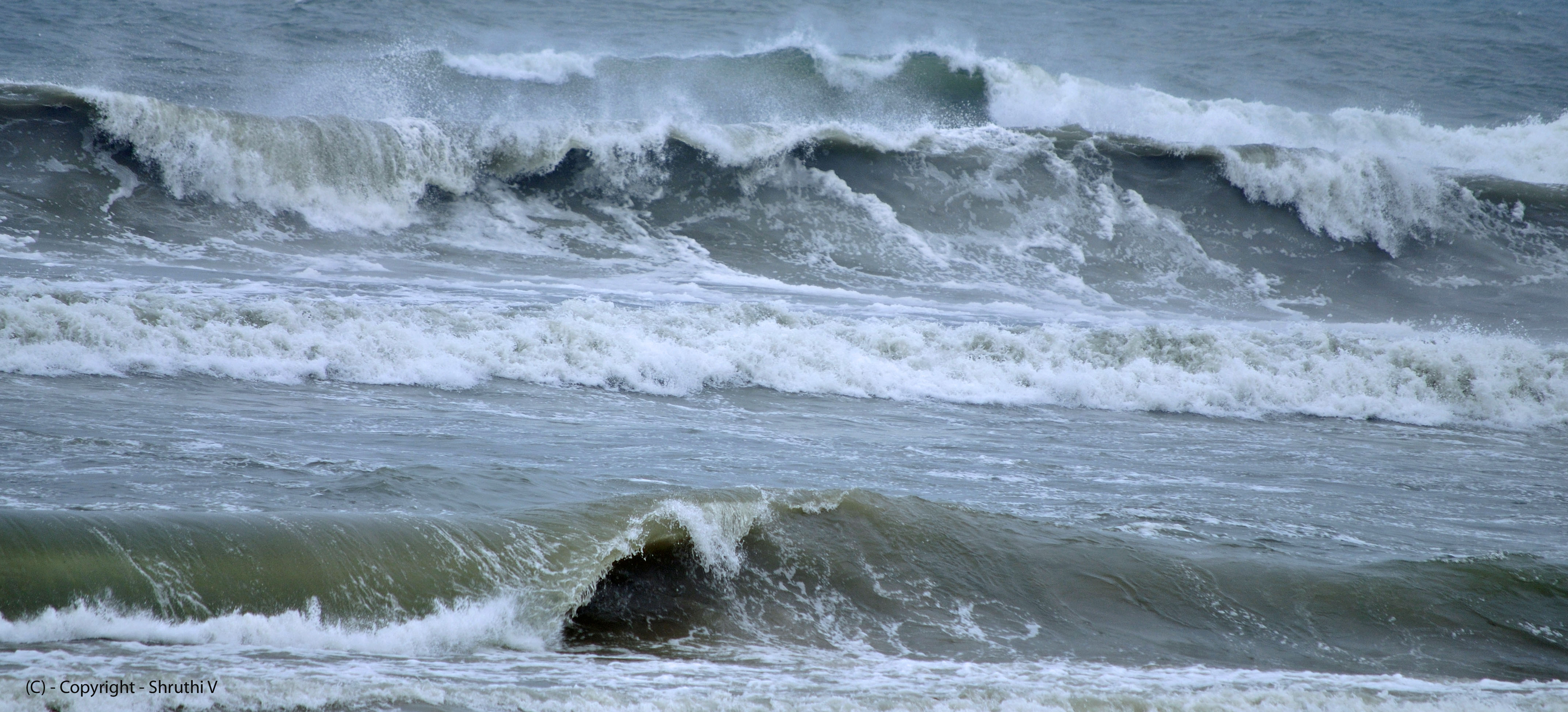
One summer when my family was vacationing at the beach, I had one of my worst scares ever in water. My parents had let my best friend come on vacation with us, and she and I were playing in the surf. It was really rough that day, but we were 17 and both very strong swimmers, so we thought it was no big deal. Plus, we were in about 3 ½ feet of water, so what could happen?

As we played, I got knocked over and rolled by a powerful wave. Coming to the surface, I scrambled to find my feet, only to have them pulled out from under me by the rip current. Wave after wave smacked me down as I tried over and over to plant my feet. I tried to yell to my friend for help, but couldn’t make myself heard before another wave had me. I could feel the bubble of panic form in my gut as I went under yet again.

As I struggled for the surface one more time, the thought, “Stop fighting and FLOAT,” went through my head. Since trying to stand had been an abysmal failure, I trusted that thought and picked up my feet. Instantly, the panic bubble popped and I relaxed. I floated. I let the waves do what they were going to do. The waves that had been so frightening, so cruel, just moments before now bore me to shore and a place where I could find my feet and catch my breath.

We often find ourselves in rough seas in our lives, in places we don’t want to be, being buffeted by circumstances beyond our control. We feel the panic rise as we struggle to find our feet, as our pleas for help go unheard for what they are by those that love us best. The fear that this is the wave that will best us keeps us fighting and resisting.

Times like these are when we most need to just pick up our feet and float. Sometimes we cannot change where we are in life or the circumstances that are beating us down, but we can change our approach. We can choose to accept the rough sea we are in and float, allowing ourselves to be carried a bit. We can float.

That day on the beach, the rough surf took me in to shore and safety, but not where I had expected to be. Pushed farther down shore than I had realized, I had to hike back to where I had begun, but a hike was a small price to pay. It was a good walk, fear replaced by relief and a new confidence in myself.

After all, I had just learned to float.