Fighting my Imposter Syndrome

The first time my head coach had me run practice for his elite senior group was nerve wracking. The kids didn’t know me well at all, and my mouth went completely dry facing this group of about 25 teenagers, with looks on their faces ranging from uncertainty to skepticism to hostility. Who was I to tell them what to do? Why would anyone want to hear what I had to say? My imposter syndrome raging, I resisted the urge to recite my resume at them and plowed forward.

I’m telling this story mainly because I’m back there again, only this time with venturing into writing and trying to figure out publishing in a social media environment. At the age of nearly 60, learning how to reach people and establish a following is more challenging than that first practice with a new group. NO ONE WANTS TO HEAR WHAT YOU HAVE TO SAY keeps pounding in my head, trying to get me to quit as I have before with my writing.

The thing is: I’m a big believer in paying attention to what the universe puts in your path, and over the last couple weeks I have encountered several blogs, podcasts, and posts where people are talking about everyone needing to use the gifts they have to get us through the next few years. It felt like something was calling me to step up and try again. So here I am, in the face of all my insecurity and imposter syndrome, putting myself out there just in case there is a nugget of something I’ve learned that would help another person navigate their challenges.

Insecurity is debilitating. It drags you back before you even start, constantly whispering to you that it doesn’t matter, no one cares, who would pay attention to you, it’s better to not even try than to try and fail. I saw it so much in the athletes I worked with—why work hard and put myself on the line when I might not win or reach my goal? There is vulnerability in caring and reaching wholeheartedly for what you want, and coming up short can feel awful and devastating. Our insecurity makes us back away from the consequences of trying and failing, but blinds us to the consequences of not trying at all. It makes us defensive and cynical, telling ourselves that our choice or non-choice simply doesn’t matter, that caring is for chumps.

But what is the alternative?

At a macro level, I think we saw the alternative in our last election. Millions of people told themselves “my vote/voice doesn’t matter, why even try, nobody cares anyway, no one wants to hear what I have to say, I’ll just bury my head and protect myself.” The consequences of this choice remain to be seen, but certainly seem to be rolling toward very negative for most Americans.

I don’t know how this journey will go for me, but I do know that I need to try. If what I write helps one person, then throwing myself out here and being vulnerable was worth it. What do I have to lose really? If I never get beyond a follower or two, that will feel embarrassing, but if I give up after two weeks because my insecurity is dragging me back, I will feel worse about myself as a person.

I don’t want to be click-baity…not my style. I want to be authentic and sincere, but maybe that’s not a thing that gets followers. Gotta try anyway, right? Maybe I should put a cat picture on my post to at least get someone to open it.
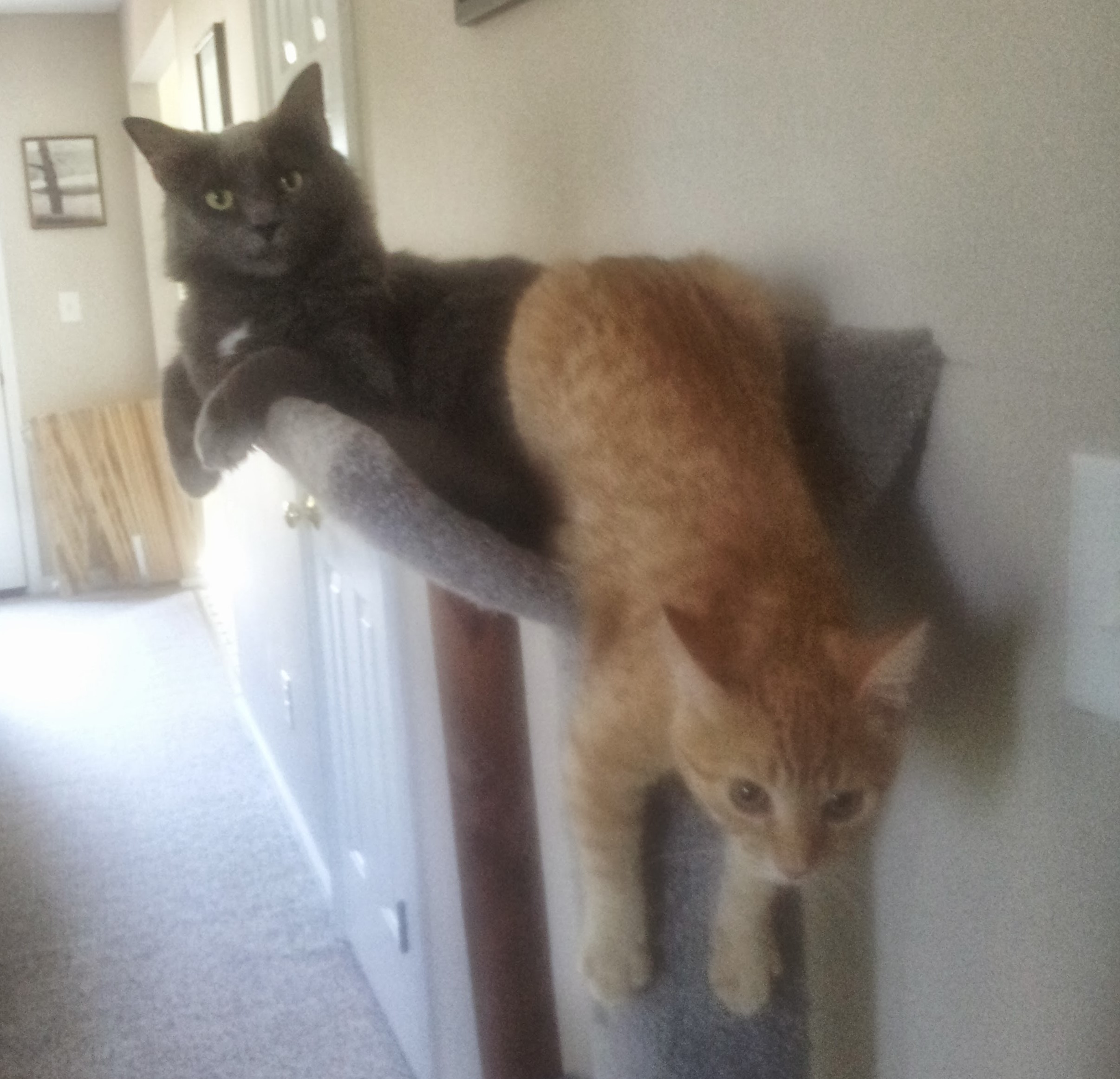
?????????????

Ready…GO!

start-gun

I’ve said it a million times AT LEAST. Most of the time, it’s been said with less than a second of hesitation between the words, with the implication being that the person I was talking to really should have been “ready” before I told them to be. Think about that. Be ready before the warning comes, and know what to be ready for. It reminds me of the old Boy Scout admonition to be prepared, and I think it carries the same meaning. Be ready, be prepared, for….anything!

Beginnings are so important. They can often lay the stage for what comes next, but mostly just the act of starting is an act of faith. In swimming, the start is literally a headfirst jump through the air, trusting in the work that’s come before to land you correctly in the water to begin your race. The start, the dive, is one of the hardest skills to teach a beginning swimmer because it is absolutely counterintuitive for humans to voluntarily fly through the air headfirst. It takes countless numbers of repetitions to make it comfortable to do so, and a countless number more to make it an instinctive response to a visual or audible cue. It is practiced vulnerability.

I’ve worked with many children for whom that leap was almost impossible, and who would look forward, or raise up, or bend like a crab to get those knees under them. Unable to leap headfirst, they instinctively protected themselves, and the older they got without mastering this skill, the more entrenched their caution became. The imagined hurt became more and more real, the avoidance more and more justified. No amount of rational discussion will change this, so coaches learn to rearrange circumstances to result “accidentally” in the desired outcome, breaking the dive action into small, doable, seemingly unrelated pieces. In other words, we trick them into success by making it almost impossible to fail.

All too often in adult life, we forget this type of process. We put enormous pressure on ourselves to be a certain way, or have certain things, and we become daunted by even trying to begin. Where to begin? How to begin? We have our eyes fixed so firmly on the end of the race that we have forgotten the beginning…or even the pre-beginning. What have we done to get ready to leap? How have we prepared? How many countless times have we practiced the kind of vulnerability it takes to begin?

A successful swimming start is far more about the being ready to leap than it is about the efficacy of the push off itself. In coaching, we talk a lot about “reaction time”, or how long it takes the swimmer to react and begin motion once the cue is given, and we measure this to try to help athletes improve. But to my mind, this is not just physical, not just a matter of having fast twitch muscles in the right proportions. It is about the readiness of the mind, and the willingness of the spirit. It is about having confidence in the practiced vulnerability of the headfirst leap, about being “ready” in a gut-level, faith-filled kind of way.

I retired from active coaching several months ago, in an effort to “ready” myself for whatever comes next. It is a sabbatical kind of time, but also a time of practicing vulnerability. I have been training myself to let go of what is familiar, let go of my preconceptions or my ideas of what my life should be, and ready myself for the leap that comes next. I am trying to live my own lesson, and rearrange circumstances to accidentally result in the desired outcome.  Whatever the task is, break it into pieces, small enough to do just a little each day, and set aside some “practice time”, with the only measure of success being whether or not you went to practice and moved things forward, no matter how slightly. I hope to trick myself into success.