Wealth

We talk a lot about wealth in this country, primarily in the form of money or net worth. It seems to be primarily what we value, and the accumulation and hoarding of vast amounts of money, companies, and real estate holdings is held out as the American dream. The few who manage to do this are, in America, also labeled geniuses and seen as role models.

It hasn’t always been this way, as I’m reminded every December when I watch A Christmas Carol. (My personal favorite is the George C. Scott version, but I also enjoy Scrooged with Bill Murray, and the Muppets do a good one too.) Scrooge’s hoarding of wealth, obsession with money, and lack of feeling for anyone else are very pointedly criticized by Dickens—they are flaws of character, and sins for which he is forging a chain of penance to bear in the afterlife, “link by link, and yard by yard”. He has no connection to the people around him, and only seems to care about his business, which Dickens drives home with the image of Scrooge not leaving his money changing house even when his partner dies. These are not subtle messages, open to other interpretations. Scrooge is a bad dude.

The thing that finally breaks Scrooge is the reality of his own death coming, the realization that no one will care, and that his money will not insulate him. Even in this moment, he is selfish. Fear for himself is the final straw, piled on top of the reminders of Christmases past and the brutal realities of Christmas present; had Christmas Future stopped with the death of Tiny Tim, would that have been enough to motivate the change in Scrooge? We’ll never know.

The movies tend to portray Scrooge’s transformation as happening overnight, but I think the ghosts only opened the door to his change. Transformation is a process, not a moment, but however that door was opened, Scrooge walked through it. As anyone who has ever tried to break a lifelong habit knows, that motivation day one is powerful, but it doesn’t last. It is so easy to slide back into what is familiar, which is what I think Dickens was dangling when he had Scrooge give Bob Cratchit hell for being late. To continue the transformation is a day-to-day slog, which takes effort, constant re-motivation, and positive feedback. The thing that kept him going, helped him keep his word, was the positive reception he received when he changed. The people around him believed he could, they welcomed him in, and they showed him what joy and companionship could feel like.

This is the wealth no one ever talks about. It is the wealth of relationship, and knowing there are people who see you for who you are and love you “as is”. It is the wealth of knowing true joy, where happiness comes from what you pour out of your cup for others, and not from what you hold to yourself. It is the wealth of understanding that the real treasure is receiving the love and trust of another human being because they have determined you are safe. It is a wealth held by millions of people who may lack every other kind of wealth the world acknowledges.

I believe it is this wealth that Scrooge is really chasing but doesn’t understand until the end. There is never going to be enough money to fill a hole that comes from a lack of love, companionship, and joy, but that is where he hangs his hopes. He fears losing what he has accumulated, vilifies taxes and charities, sees himself as the hard-working hero, and walls himself off more and more as the years go by. His isolation and ego make him cruel and cold. He perceives poverty as a failing of character or morals, and dismisses and denigrates those in need. He is only, finally, spurred to change by the realization that he desperately wants someone to care and that time is running out for him.

Year after year, people sit 5th row center in theaters watching A Christmas Carol and the point flies completely over their heads. They shell out hundreds of dollars per seat for a show depicting disdain for the excesses of monetary wealth. Just as Scrooge snuffs out the light of truth with Christmas Past, these folks ignore the message and joke about ghosts and Tiny Tim. They don’t see that the hole in Scrooge’s heart mirrors their own.

I have discovered through my years on this earth that wealth manifests in a lot of ways: joy, love, community, laughter, art, beauty, nature, and yes, money. Money has a place in greasing the wheels of life, but shouldn’t be our lives. It shouldn’t define who we are, or be the driver behind everything we do, or be the only factor in making decisions for ourselves or our businesses. When the day comes for me to face my own Christmas Future end, I hope to not look back wishing I had laughed more, loved more, or been in community more. I hope that monetary wealth will be the last thing on my mind.

Merry Christmas, and may the days ahead bring you the wealth of love, joy, and companionship.

Business!’ cried the Ghost, wringing its hands again. “Mankind was my business; charity, mercy, forbearance, and benevolence, were, all, my business. The deals of my trade were but a drop of water in the comprehensive ocean of my business!”
― Charles Dickens, A Christmas Carol

Who Are You?

Don’t let other people answer that question for you.

I was a really curious and enthusiastic little kid. One of the very few TV shows I was allowed to watch was Star Trek. I looooooooved Star Trek and decided at age 4 that William Shatner was my boyfriend. (Side note: when I got a chance to meet him at age 50, I told him that, and he was wonderfully and perfectly sketchy and flirtatious about it.)

I also have the moon landing as one of my earliest memories, so it is no surprise that I ended up wanting to be an astronaut. Because of Star Trek and the women I saw there, it never crossed my mind that girls couldn’t do that, so that was my dream. I would become a pilot then get a job at NASA being an astronaut, and go into space and maybe the moon. It was a want and certainty as deep and vibrant as Van Gogh’s Starry Night. I had that absolute confidence that comes with being pre-pubescent and not having much experience with the crappiness of the world yet. Or frankly, the crappiness of people who should love you the most.

I was about 11 years old, in the car with my mom, and she asked, “So what do you want to be when you grow up?” It seemed like such a normal question at the time, but looking back I wonder how she didn’t already know. I made no secret of it. I wonder now if she didn’t ask just so she could say the NEXT thing: “An astronaut? You’re not good enough at math to do that!” It was so dismissive, so unfeeling, it felt like she had slapped me. At the time, I was in advanced classes for both language and math, and was at least a year ahead of most of my peers in both. I didn’t have a great algebra teacher, and was struggling a little with concepts, but I was still AHEAD of where I should have been. But I was 11 years old, and this was my mom, so “I’m not good at math” became a part of my story about myself, and I gave up on the idea of being an astronaut. I still wanted to, but that want had become a faded watercolor, a wish for the impossible.

Fast forward 5 years: I’m a junior in high school, starting to think about what was next, and considering the Air Force academy. I still wanted to be a pilot, you see, and maybe maybe that would teach me something I could do at NASA, even if I couldn’t be an astronaut because “I’m not good at math”. My swim coach who I’d been with for all those years asked me what I was thinking about, and I told him…and his response was to laugh and say, “The Air Force Academy? You’ll never make it! You don’t like being told what to do!” Again, I felt slapped. Another trusted adult, another evaluation of WHO I AM that was different than what I thought I was. But I was 16, and this was my coach, so “I don’t like being told what to do” became part of my story about myself, and I gave up on the idea of being a pilot.

Both of those interactions were pivotal moments in my life, and represent one of the few things I have regrets about: allowing other people’s opinions of who I am become who I accepted myself to be. I let other people define me for a LONG time, not trusting what I knew about myself but swallowing their off-hand remarks or criticisms as truth. I was in my 40’s before it struck me what I had done, and it was while I was juggling 4 jobs to keep things together after my divorce, that I said, “Wait a damn minute! I’m not LAZY like my family told me! What else were they wrong about?!”

The more I thought about it, the more annoyed I got. The very people who should have been supportive and encouraging were the source of my greatest angst and insecurity. What I finally realized is that everyone is going to have some kind of opinion about me, about who I am, based on their own baggage, perceptions, and insecurities, and that it is up to me to accept or reject it. Some people (like my coach) will do it thoughtlessly, like a joke, not understanding that it can take root in someone’s heart because they trust you. Some people (like my parents) think that saying negative things to you will motivate you to do better in order to prove them wrong. Some people (like my mom in particular) do it to manipulate your behavior into something that makes them feel more comfortable. Some people do it to bring you down, or because you don’t fit in a box they understand, or because they can only feel big if they make someone else feel small.

At the end of the day, you don’t have to understand their motivation. All you need to do is quickly weigh it against your own heart, “Does that feel right? Does that fit who I know myself to be?”, and if not, yeet that judgment into the universe and move on.

The other thing I learned and really want you to hear is to be suspicious of someone telling you who someone else is, especially if what they’re saying upsets you. (for example: “Democrats just want open borders” or “that kid is just saying he’s trans to win at sports”, etc) In this situation, their motivation DOES matter. Ask yourself why is this person telling me this? Do they have an axe to grind? Are they seeking attention/clicks? What do they get out of upsetting me? Do I have direct personal experience that supports or refutes this? Do they say nice things about other people or groups, or are they consistently negative? Why should I believe it? Why do I WANT to believe it?

Most of the time, people are absolutely full of shit about other people’s characters and motivation; we all judge each other through our own lens—”if I acted like that, it would be because I intended _____, or because I felt like ________, or because I wanted ______”. None of that tells you what is in someone else’s heart.

The bottom line is that I can’t control what other people think of me or others, but I absolutely can gatekeep what I choose to internalize. I don’t have to let their garbage attitudes direct the course of my life or my dreams and aspirations. I don’t have to fall for the clickbait. I don’t have to trust someone else’s analysis of a third party. And I absolutely do NOT have to allow other people to define who I am or what I “should” be.

I realized recently that my mom probably killed my astronaut dream out of fear that I actually could end up doing something so dangerous. Her choice to hurt me probably came from wanting to make herself feel better. It tracks with all the rest of her parenting. It was not in my personality, especially at that age, to push back with the single-minded “I’ll show you!”. My response for decades was to feel bad about myself and nurse hurt feelings. I don’t recommend this approach.

Participation Trophies

I loved working with teenagers. Even with all the challenges of navigating hormones and high school, they are wonderful, raw, unfiltered humans, still filled with passion and humor and alive-ness that gets bludgeoned out of adults by work and bills and obligations. Teenagers do NOT tolerate bullshit and can smell it a mile away.

Participation trophies: the toxic brainchild of someone, either Boomer or GenX, to smooth the ruffled feathers of a 4 year old who shouldn’t have been in organized sports yet. This pacifier might work OK (I won’t say well) for little tiny kids, to reinforce that showing up and trying deserve acknowledgment, but they need to be phased out by the time kids hit about 8 years old. They catch on pretty quickly that participation ribbons and trophies mean nothing, and by the time they’re teenagers, those expensive little trinkets are being thrown in the trash as soon as Mommy’s back is turned. The “reward for breathing” is bullshit, and every teenager knows it. With teens, giving them praise when they know they don’t deserve it earns you a healthy amount of disrespect and a reputation as a liar. Period.

I’m not going to lie: I was a tough coach. (Or, as the misogynistic moms used to say “mean”. Eyeroll.) I had high expectations, pushed my swimmers to do their best, and absolutely would NOT tell someone they were doing great if I didn’t mean it. As a result, the kids knew when they got praise, it was real and truly meant something. I was honest about the hard work they needed to do to reach their goals and didn’t sugar coat it. There were days when they hated my honesty, and me, but even on those days, they trusted me. They trusted I was telling the truth. They trusted that no matter what, they could count on me. They trusted that even when they were hating me, I was still in their corner.

I think often of those teenagers and what coaching them taught me, and I’ve tried to translate it to what we’re going through right now as adults in this country. Adults still want “no bullshit” people in their lives, and as vile as I personally find our former-soon-to-be-again president, I do see how some equate his constant hateful, tactless, shit-talking to being “no bullshit”. He is awful, but he doesn’t hide it or pretend otherwise. He lies constantly but doesn’t excuse it. He may drown you in an avalanche of manure, but you know where you stand while he’s doing it. For a LOT of people, that’s enough to be able to hang adjectives on him like “honest” or “real”. There’s an old adage: don’t piss on my leg and tell me it’s raining—I’m guessing part of the attraction of DJT is that he just tells people he’s pissing on them and doesn’t care.

Democrats, on the other hand, are so busy trying to please everyone that no one trusts them, even when they have good policies. The truth is that most people DO like their policies, when you remove a reference to what party proposes it; the dislike and distrust come in when people know who is behind it. Even the people they’re trying to help don’t trust them. The people pleasing looks like pandering and ends up meaning as much as those participation trophies. They talk big about fighting, but then roll over and show a soft belly in the face of election results that at minimum deserved calls for a recount. They now seem unreliable as well as dishonest, which has undercut every good idea they have.

Here’s the thing: you can have a big tent and a big heart and try to do what’s right for all of America without abandoning being “real”. Alexandria Ocasio Cortez and Jasmine Crockett are doing it daily, and there are people that voted for them while also voting for DJT…for the same reason! They found them to be genuine, and that means a hell of a lot to people.

Those of us who oppose the direction this country is about to go have a very hard row to hoe ahead, and the first thing that needs to happen is a rebuilding of trust. We have to go back to basics of being genuine and straightforward, and our word meaning something that is true and that people can rely on. Honestly, I think it’s going to come from those of us who have never run for office and tend to be disgusted with the status quo of politics; we will need to step up and change this mess. It is easy to sit in the bleachers and watch and second guess. If we want to achieve a different end than oligarchy and wage slavery, we need to step off the bleachers and suit up.

Just showing up is not enough. If we want the trophy, we absolutely have got to do the hard work and swim the race to win.

Walls Redux

Revisiting and updating…seemed timely

The wall is a physical barrier that must be dealt with in our sport, but it is also a mental/emotional one.

It is in our nature to slow at a wall, to look up at it, to ponder how to get past it. Our tendency is to assume our path continues on past the wall, following the track we have been on, and that the wall stands in our way. In swim training, we must overcome this mindset:  our path does not continue on, but resumes in another direction. The wall becomes a chance to speed up, to readjust, to jump off and speed away on our new path. The wall is not obstacle, but opportunity.

My other experience with walls is The Wall exercise in team building. After working through a series of smaller challenges with a group where you have (hopefully) ironed out differences, insecurities, communication issues, and trust, you are faced with a final challenge. A huge and intimidating wall that the whole team has to get over. There are no handholds or ways to boost yourself, and it is too tall for even your tallest group member to jump to catch the edge. You MUST work together, using the gifts and talents of the group, to find a way over. It is one of the most initially disheartening things to face, and it is easy to fall into “this is impossible”.

I don’t know how others have experienced this, but our group struggled a bit at first. Several people (myself included) balked because of physical limitations like weight or bad back. Some people balked out of fear, or body image issues, or lack of confidence in their physical abilities. I say we struggled “a bit”, but the truth is that we hemmed and hawed and bickered for probably 15 minutes before we made any attempts to get over. FINALLY, a woman who had been a gymnast as a kid and was all of 5 feet tall, told a couple of the guys to give her a boost. Even pushing her as high as they could, she could only get hands to the top of the wall…but then, using her knowledge of gymnastics and flexibility, she tossed one leg straight up and hooked her foot on the top of the wall and pulled herself over. (To this day, it is one of the most impressive things I’ve ever seen someone do.)

Once that happened, we were re-energized. Seeing it was believing it, and working together we got everyone over that wall…boosting from the bottom, reaching from the top to catch hands and help pull, shouting encouragement. When the last person came over, we were EUPHORIC. We all felt the lesson in our bones: we had accomplished something that seemed impossible because we worked together. None of us, no matter how talented or accomplished or naturally gifted, could have gotten over that wall alone; success was only possible as a team.

So how does all this philosophical rambling about walls matter in broader context? In preparation for writing this, I looked up the definition for the word wall, and was interested to find this:  an extreme or desperate position or a state of defeat, failure, or ruin. Those of us who supported a different vision of America’s future than the one we’re facing are feeling this deeply right now. We hung our hopes on joy and progress only to run face first into the wall of other people’s fear, prejudice, and apathy. What now, what next? This wall looms over us, and I now stand in front of it, feeling a bit desperate. I cannot see past it to where we go from here.

We can take lessons from both swimming and team building. We can speed toward this wall, and see it for the opportunity it is. We can have the confidence to race at this wall, lower our heads, hold our breath, flip and jump as hard as we can in our new direction. We can remember that we are not alone in this endeavor, and that our way to deal with the wall is in community. Our “team” can succeed where we as individuals will struggle. Our path is on a different course, one that we cannot yet see, but it will be there, and this wall that seems so daunting is our best chance at finding it. The alternative is letting the wall stop us, leaving us stuck in a place we don’t want to be and weren’t trying to get to. Screw that—let’s push off this wall together and see where our new direction takes us.

Fighting my Imposter Syndrome

The first time my head coach had me run practice for his elite senior group was nerve wracking. The kids didn’t know me well at all, and my mouth went completely dry facing this group of about 25 teenagers, with looks on their faces ranging from uncertainty to skepticism to hostility. Who was I to tell them what to do? Why would anyone want to hear what I had to say? My imposter syndrome raging, I resisted the urge to recite my resume at them and plowed forward.

I’m telling this story mainly because I’m back there again, only this time with venturing into writing and trying to figure out publishing in a social media environment. At the age of nearly 60, learning how to reach people and establish a following is more challenging than that first practice with a new group. NO ONE WANTS TO HEAR WHAT YOU HAVE TO SAY keeps pounding in my head, trying to get me to quit as I have before with my writing.

The thing is: I’m a big believer in paying attention to what the universe puts in your path, and over the last couple weeks I have encountered several blogs, podcasts, and posts where people are talking about everyone needing to use the gifts they have to get us through the next few years. It felt like something was calling me to step up and try again. So here I am, in the face of all my insecurity and imposter syndrome, putting myself out there just in case there is a nugget of something I’ve learned that would help another person navigate their challenges.

Insecurity is debilitating. It drags you back before you even start, constantly whispering to you that it doesn’t matter, no one cares, who would pay attention to you, it’s better to not even try than to try and fail. I saw it so much in the athletes I worked with—why work hard and put myself on the line when I might not win or reach my goal? There is vulnerability in caring and reaching wholeheartedly for what you want, and coming up short can feel awful and devastating. Our insecurity makes us back away from the consequences of trying and failing, but blinds us to the consequences of not trying at all. It makes us defensive and cynical, telling ourselves that our choice or non-choice simply doesn’t matter, that caring is for chumps.

But what is the alternative?

At a macro level, I think we saw the alternative in our last election. Millions of people told themselves “my vote/voice doesn’t matter, why even try, nobody cares anyway, no one wants to hear what I have to say, I’ll just bury my head and protect myself.” The consequences of this choice remain to be seen, but certainly seem to be rolling toward very negative for most Americans.

I don’t know how this journey will go for me, but I do know that I need to try. If what I write helps one person, then throwing myself out here and being vulnerable was worth it. What do I have to lose really? If I never get beyond a follower or two, that will feel embarrassing, but if I give up after two weeks because my insecurity is dragging me back, I will feel worse about myself as a person.

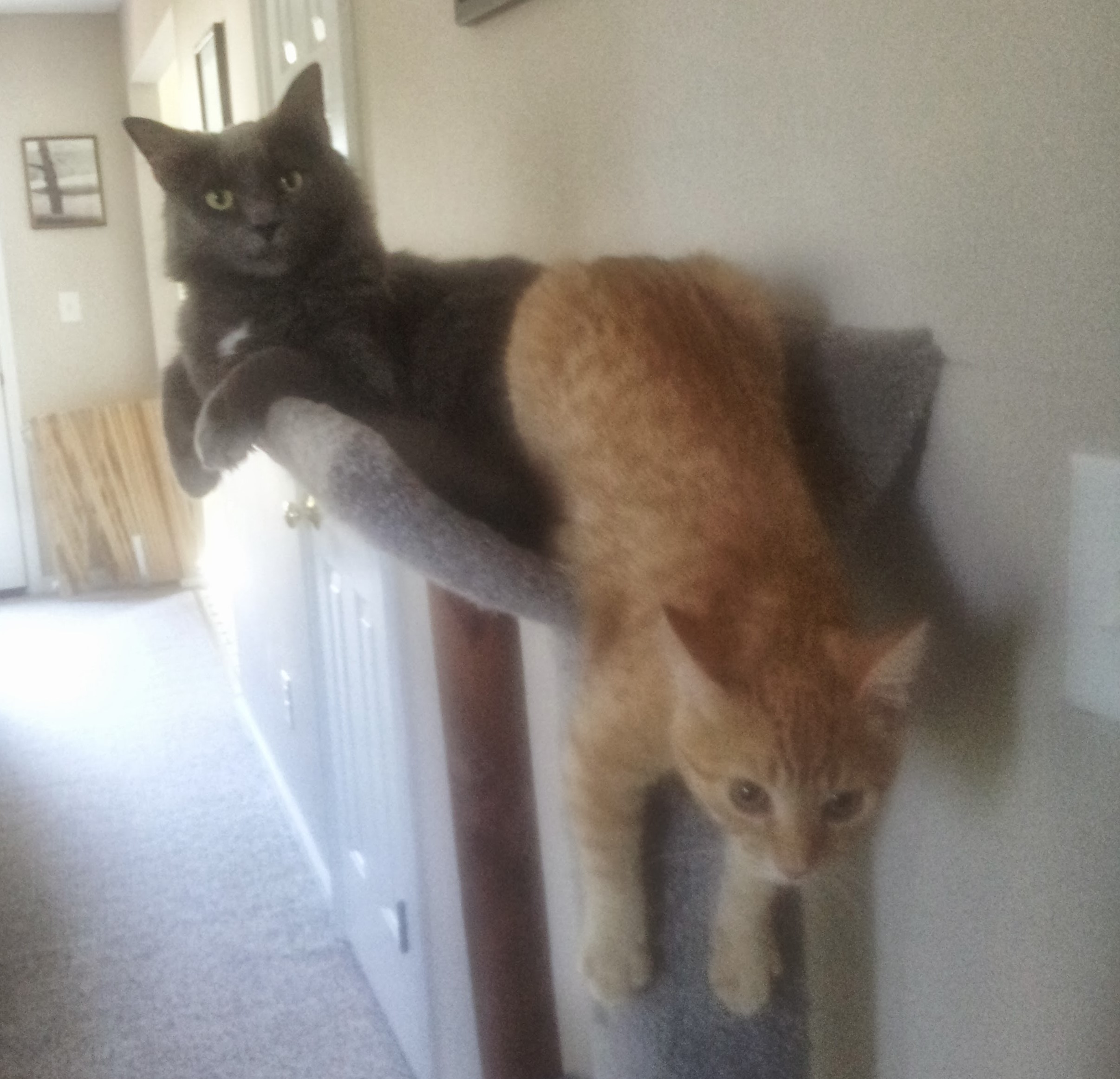
I don’t want to be click-baity…not my style. I want to be authentic and sincere, but maybe that’s not a thing that gets followers. Gotta try anyway, right? Maybe I should put a cat picture on my post to at least get someone to open it.

?????????????

Empty Lanes

Empty lanes of a swimming pool

You can’t win if you don’t show up.

When I started coaching my high school team, the existing habit was to allow the swimmers to pick their events. Being teenagers, they only picked what they liked or felt 100% comfortable with or knew they could win, with the end result being that we left lanes empty in some of the more challenging events. Why choose to swim the 100 butterfly when you could choose the 50 freestyle? Why pick an event you knew you were going to lose? It took doing some math on a whiteboard to show them that those empty lanes were why they kept losing.

In our high school swim league, the competition pools had 8 lanes, so each team could put up to 4 swimmers in each event. Points were awarded down through 7th place, so it was mathematically possible to nullify the other team’s first place by capturing enough of those other points. By not filling every lane, we were ceding points. By not filling every event, we weren’t getting swimmers into the big championship meets.

Once they bought into the math, the next step was their confidence. Building their technique, setting smaller challenges, setting expectations that everyone would try those “harder” events at least once—those were the things that slowly developed their belief that they could succeed. And practice, practice, practice. They became proud of those 6th and 7th place finishes, knowing their small contribution of points moved the team ahead. By swimming a variety of events, they learned they improved their chances of qualifying for regional championships.

I think there is a lesson for Democrats and Independents in this.

Living in a reddish-purple state for many years, I saw SO MANY state and local races where Republicans were running unopposed. Like my teenaged swimmers, the opposition had decided to focus on areas where they were comfortable running and knew they could probably win. They left empty lanes in election after election, and again, I think those empty lanes are why they keep losing. The win (first place) of a Democrat in an urban area gets nullified quickly by the votes (points) of the team that didn’t leave those lanes empty in multiple rural areas. Is it challenging to run in those areas where it’s going to be an uphill battle? Absolutely! Is it worth it in the bigger scheme of things? Absolutely! Because when you leave those lanes empty, you are not only ceding the win to the other team, you are demoralizing your own team. You are creating a situation where even the people who agree with you end up feeling abandoned.

It’s going to take time—finding people willing to take on the challenge, helping them build their skills in communicating their vision, setting expectations that it may take a few cycles to see real progress, understanding that coming in 2nd doesn’t mean you didn’t succeed in making some points with people. It will take practice, practice, practice. It takes the will to try, knowing you might not win.

My swimmers learned that I truly did celebrate those single points of 7th place. They learned that their effort MATTERED. They learned to have pride and confidence in their contribution, and to feel connected to their team. Ultimately, they learned that the only real failure is not trying at all.

Journalism

I’ve been sifting through some of my older writings lately, and I’m astonished at how little things have changed. I wrote the first part of this in 2011, and the second part in 2018, and could have easily written it yesterday.

Part 1:

I’ve come to the realization that we no longer have a free press in this country. It used to be that members of the media were observers and journalists, more words on paper than celebrities in their own right, reporting in a hopefully unbiased way on the things people were already interested in. Slowly but surely, these journalists became entertainers, enjoyed their own celebrity, and integrity in the media gave way to money. Corporations with political agendas bought up news organizations as corporate geniuses realized there was huge money in controlling the information people were given.

The media no longer observes, it directs and orchestrates where our attention is paid. They (along with our politicians) participate in the circus to divert our attention away from real issues, and onto the latest inflammatory drama. The danger in the loss of our truly free press is that we as a society have lost the ability to exert any kind of “peer pressure” on members who behave wrongly because the sleaze in question is bombarded with attention, cameras, and “journalists” from around the world, making their idiocy into a career.

Part 2:

Little did I realize at the time how ill-informed I was. I recently came across this quote…and was completely shocked by the date at the end:

“There is no such thing at this date of the world’s history in America as an independent press. You know it, and I know it. There is not one of you who dares to write your honest opinion, and if you did, you know beforehand it would never appear in print. I am paid weekly for keeping my honest opinion out of the paper. Others of you are paid similar salaries for similar things, and any of you who would be so foolish as to write honest opinions would be out on the streets looking for another job. If I allow my opinions to appear in one issue of my paper, before 24 hours, my occupation would be gone. The business of the journalist is to destroy the truth, to lie outright, to pervert, to vilify, to fawn at the feet of Mammon and to sell his country and his race for his daily bread. You know it, and I know it, and what folly is this, toasting an independent press? We are the tools and the vassals of rich men behind the scenes. We are the Jumping Jacks. They pull the strings, and we dance. Our talents, our possibilities and our lives are all the property of other men. We are intellectual prostitutes.”

— John Swinton, CEO, New York Times, New York Press Club, April 12, 1953.

All I could think was “What the F***???”  Really? The CEO of the NY Times knew this in 1953?  Why have I been laboring under this false illusion for so long?  When I wrote the item at the top, in 2011, I thought that the phenomenon of corporate control of the media, and the complete selling out, were coincident with TV journalism and the instant celebrity of all who looked at us out of the magic box. That the sleaze was post-Walter Cronkite.

All I can say is that I think we want to be lied to. If we wanted our journalists to be JOURNALISTS, we would insist on it. We love the Great and Powerful Oz, and don’t really want to know what’s going on behind the curtain. And that makes me sadder than I can say.

Culture of Violence

I originally posted this to Facebook in February of 2018…and nothing has changed.

Another school shooting…another mass shooting. I find myself completely numb to it anymore. Not sad or “tense” (as some of you will think) or even advocating for change. Numb. Numb because if I let the heart ripping grief back in, it will overwhelm me. The darkest part of me shrugs and thinks, “Maybe this is America’s choice for population control.”

The arguments are tiresome and somewhat sickening. Yes, the gun is just a tool. No, this isn’t about lack of disciplining by parents or kids not tattling on their friends in time. No, taking away all the guns isn’t the solution. Yes, it is somewhat about our broken mental health system. No, everyone being armed isn’t the answer. Yes, “thoughts and prayers” has become an empty and useless sentiment. No, wanting to fix something that feels so broken is not “politicizing” grief. Yes, there will always be bad guys who will find a way to do harm.

Our problem, deep down, is our culture, and we need to own it. Whether we ultimately fix it or just accept this as status quo, we need to own the fact that we are, at heart, a culture that embraces the idea of violence as a solution to our problems. Don’t get me wrong: I love my country and the ideals we were built on, but the reality has unfolded in a bloody way. Think about it: we brag about how our Founding Fathers fought and killed for their beliefs; we euphemistically call our period of genocide and invasion “Western Expansion” and celebrate those pioneers who took territory at the point of a gun; we continue to wave the flag of secessionists who brought about the bloodiest and deadliest conflict in American history; we romanticize the “Wild West” as a time when right and wrong were decided by street duels and death; we chose a National Anthem that is a celebratory ode to war; we cheer movies where the hero ends the story by blowing away the bad guy. We must face the fact that, flag be damned, we have raised the gun as our true symbol of freedom and righteousness.

Being me, I’ve tried to figure out WHY. Why is the 2nd amendment the only one we fight so hard to preserve? Why do we argue so vehemently and with such vitriol at any whisper of gun control? It is a little too simple to say it’s money and the NRA. The NRA would have no crop without a fertile field to cultivate. So why is it that Americans are so ready to go all in for this one amendment while we shrug and turn away at the violations of free press and free speech and equal protection?

I think it’s fear and uncertainty, combined with the tangibility of “arms”. People are scared of how fragile their life circumstances are. We feel vulnerable to a government that can take away our money through taxes and our property through the power of eminent domain, and insignificant and powerless to change that at the voting booth in the face of billions in lobbyist money. The abstracts of free speech and equal protection are cold comfort when you feel like you are one illness away from losing your home. But a gun. A GUN is something we can buy, something we can touch, something we can own, something we can hide, something that scares other people, and something that gives us a sense of power. We believe we can defend our safety, our livelihood, and our property EVEN AGAINST OUR GOVERNMENT with the power of a gun, backed by the Constitutional protection of the 2nd Amendment. It is our line in the sand against fear and feeling powerless.

The sad irony is that despite the ideals of our Enlightenment forefathers, despite the beauty of the ideas they penned into the Declaration of Independence and Constitution, they chose violent rebellion as the mother to birth our country. That willingness to accept that the ends justify the means, no matter the consequences, and that blood must be the price of freedom, is embedded into our national DNA. We need to face it and own it, and then decide: do we fix things or accept the status quo?

The Level Playing Field

I think part of why we all love sport so much is that every game, match, or meet starts off even, with everyone having an equal chance to win. Teams of equal size, equal opportunity, the scores all at zero, the playing surface identical…a tableau of possibility and hope that we spectators can pour our emotions into, rejoice or mourn the outcome, then start fresh the next time.

As a coach, the absolute essence of competition was based around the idea that both teams were operating from the same basic framework of rules, events, and number of available lanes, with the only differences being who was on our team and how we chose to use our entries to maximize our chance of doing well. NEVER ONE TIME did any coach try to alter the rules in their favor, eliminate members of my team to gain an advantage, take away my assigned lanes, or outright cheat to win. Imagine your favorite sport:  your team shows up to play, and part of your team is barred from entering. Your scoring area has been reduced while the other team’s is larger. You’d be pissed, right? You’d scream, “NOT FAIR!!!”

That is exactly what is and has been going on in American politics for years. Gerrymandering has reduced the scoring area for Democrats across the country, which to my mind is just flat cheating, despite how “legal” it may be and no matter who is doing it. Writing cheating into law doesn’t make it right, and the concept of the winners getting to draw the districting map for voting was a BAD idea from the start. Gerrymandering has given a huge advantage to Republicans, who are now using that power to further abuse the rules of fair play.

Let’s think about this in terms of the NFL. All of the coaches get together to pass a rule that whoever wins the Superbowl gets to make a rule change that the rest of the league will live under. At the time, the coaches (all being confident in their ability to win the Superbowl) would think this was a great idea, and imagine some minor tweaks they would make. For a few years, the NFC and AFC trade wins, and the changes are relatively benign; then AFC teams win three or four years in a row, and the NFC coaches are disgruntled. A few of them get together, and decide next time one of them wins, they’re going to take advantage of the rule change ability to really make it hard for the AFC to win again. An NFC teams wins, and the rule change that year is that AFC players must play with their ankles tied together during the playoffs and Superbowl. It would be in the rules, but it would make it so no AFC team could ever win the Superbowl again. The level playing field would be gone.

Just this week, Republicans in Tennessee used a violation of a procedural rule (not a LAW, just a rule of behavior in their workplace) as an excuse to expel (not reprimand, EXPEL) members of the House who represent a large, mostly Democratic, portion of Nashville. They used their power to tilt the playing field in their favor and remove their competition and silence their “fans”. This idea offends me to my core. It goes against every single thing I operated under as an athlete and believed in as a coach.

I have to wonder sometimes if any of these Republicans ever played sports. If they did, they’ve certainly forgotten the lessons, and the concept of the level playing field.

If you have to cheat to win, is it really winning? If you have to bully to get your way, are you really strong? I have never understood how the people who do these things can possibly feel as though they’ve achieved something.

Where to Start?

I haven’t written in a while, and with everything going on, am struggling with where to start. To steal shamelessly from Julie Andrews:

“Let’s start at the very beginning
A very good place to start
When you read, you begin with A-B-C…”

When I started this blog, it was intended to bring forward some life lessons I’d learned from coaching and apply them to life more broadly, and perhaps if I was lucky, be a bit inspirational now and then. I need to depart from that format for a while in an effort to try to make sense of what is going on in our world, and perhaps through talking it out, find a way to move forward in a way that feels positive and productive.

I read recently that Kansas has passed a law banning transgender girls from participating in girls’ sports…a law that apparently affects ONE person in the state. One. In a state of nearly three million people, THIS was the issue that rose to the top of the priority list for the time and attention of the elected officials of the state. THIS was the most important need to be addressed. Not the educational system (ranked 27th in the nation, with over 497,000 students in public school), or improving state-maintained roads and infrastructure (over 10,000 miles worth), but something that affects a vanishingly small percentage of the population. Really?

When I look at this, and at how legislators across the nation are spending their time and political power, I can’t help but wonder “why?” Why is so much effort being expended to stop people from expressing themselves freely, exploring new and different ideas, or taking care of themselves and their families in the ways they see fit? Why is this level of control being exerted?

When I was coaching, the teenagers always wanted to wear “technical suits” for their championship meets. These are suits that provide some degree of compression and water resistance, and the kids believed passionately that they wouldn’t be fast without them. No matter how much I assured them that it was the work they had done to prepare their bodies to race, and not the suit, they believed otherwise. Why? The suit was something tangible they could put their hands on, and it gave them a sense of confidence and control they didn’t have in themselves. The suit pacified their fear.

Coaching gives you the opportunity to observe people in a lot of different emotional states, and fear was one I saw regularly. I think humanity as a whole is particularly gripped by fear these days: fear of changes in our climate, fear of dwindling resources in an ever-expanding human population, fear of disease, fear of each other. These fears are real and valid and overwhelming, and hit at our deepest fear, which is our inability to fix any of them. When everything feels out of control, you seek to control anything you can.

I think leaders in churches and governments very sharply feel this fear of not being able to fix these things; they know they don’t have answers or solutions, and they share the fears we all have. Unfortunately, some are responding by inventing issues and targets that we can aim our fears at, that they can then “solve”. Like the technical suit, it provides a sense of confidence and control, as long as they can get us to believe that fixing these invented issues will pacify our fear.

Their solutions are lies because their problems are lies. Like the Wizard of Oz, they’re trying to distract us from the truth, and the real problems only get worse while they waste time driving us apart over who people love, how they dress, whether they choose to have a child, and what words are in books. They could 100% get their way in all of these things, and we would still be facing climate change, dwindling resources, possible pandemics, and even more fear of each other.

I find myself getting angry with the people who believe these lies and latch onto these invented issues as though they are the real problem and what is “destroying” America. When I feel that anger and frustration (and my own fear), I have to remind myself that they’re scared and overwhelmed too…they’re just more comfortable believing the comfortable lie with the easy answer than I am.

I believe we need to work harder to connect with each other directly and not fall into believing lies and easy answers. We need to not listen when a newscaster or preacher or legislator tells us how someone else feels, or what someone else is trying to do to us. It is not gay marriage or men in dresses or books about racism that are making our daily lives feel hard or the future feel hopeless. I have been trying to train myself, every time something elicits an emotional response, to ask “Why do I feel this way? What does the person telling me this gain from me being upset?” For me, it’s been a step in the right direction, and I’ve realized that most of the time the people telling me the bad things want my money or my clicks or my attention.

My other small step has been to try to listen and calmly respond when someone speaks out of their fear or ignorance or judgmentalism. I tell a story from my life that has shaped why I feel differently about what they said. If they don’t listen, or persist, or get hostile, I tell them we have to change the subject or I’ll need to walk away. It’s worked surprisingly well with some people, but full disclosure: it’s a work in progress for me to not just avoid the conversation to begin with. Introvert here.

I’m considering volunteering as a way to reconnect with community and do something tangible toward fixing the real problems we face. I’m not sure yet what that looks like, and am having a hard time figuring out what to do. More to come.

Whatever you can do to manage your own fear, find some peace, take a positive step, or rebuild community helps in this world. At a minimum, it helps your own stress go down. If you have good ideas, please share in the comments! Hopefully, I will be writing more soon.